
Last updated October 16, 2026
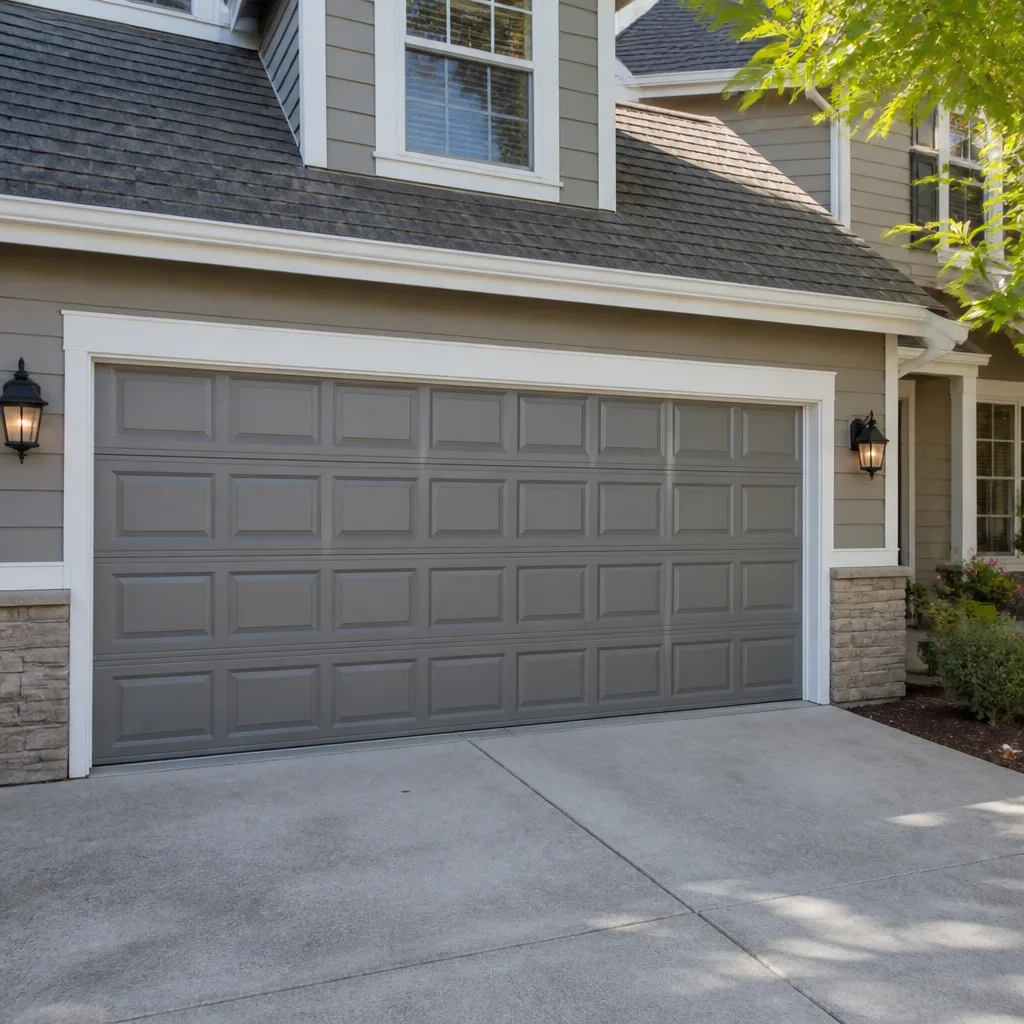 Raised-panel steel
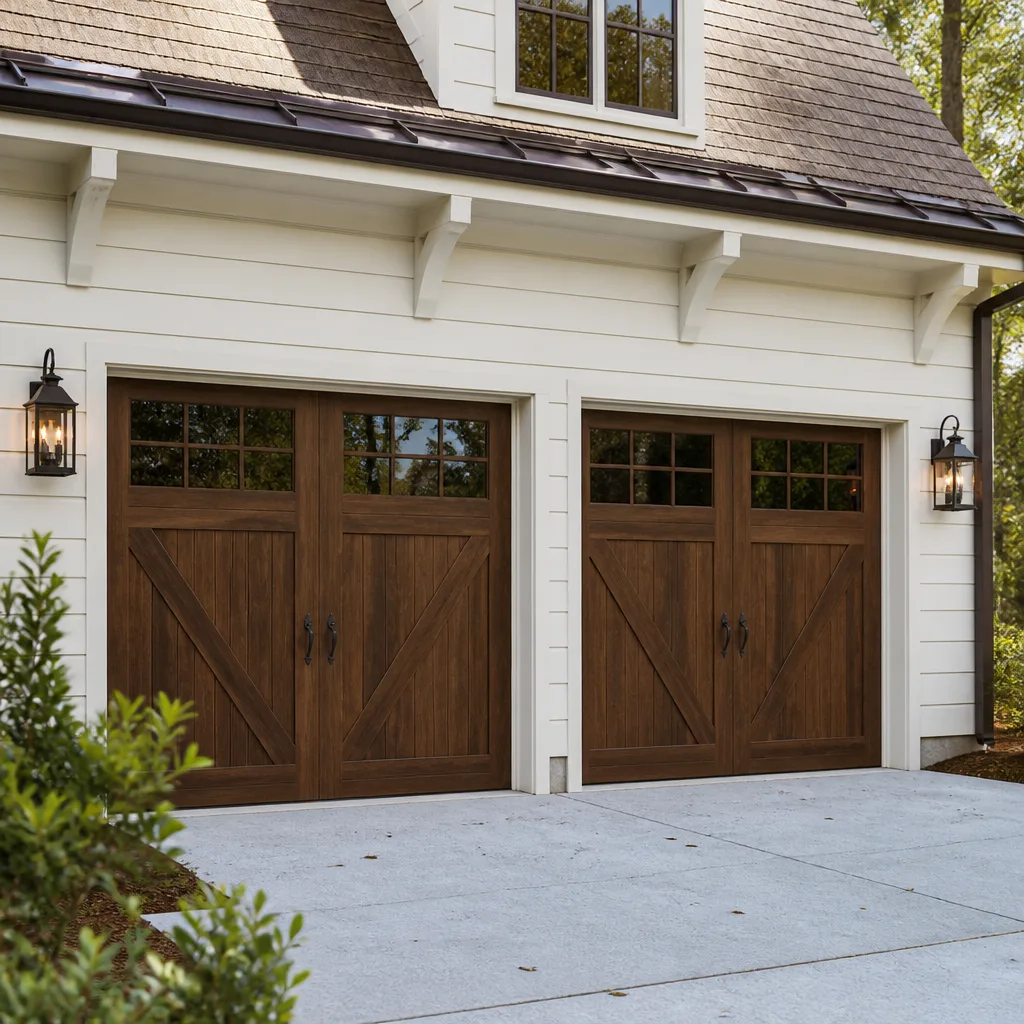 Carriage house
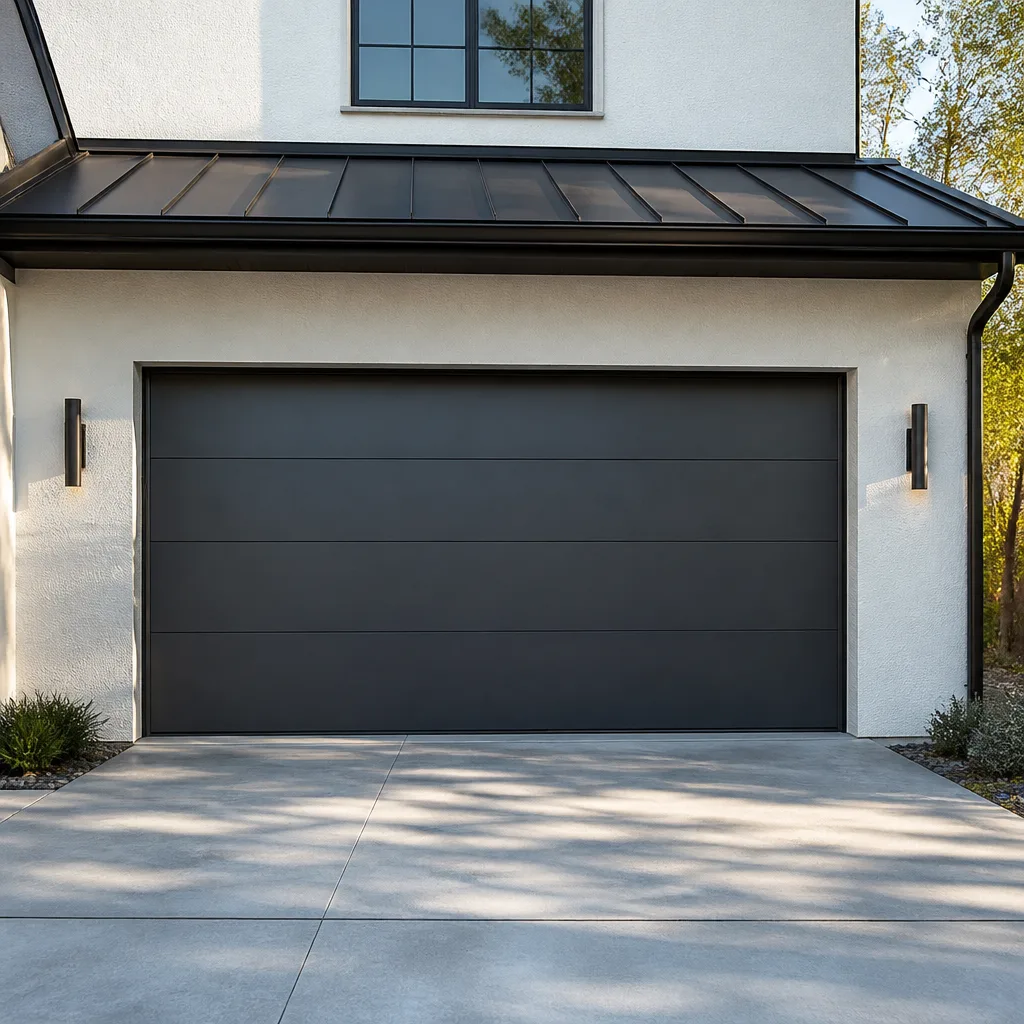 Modern flush
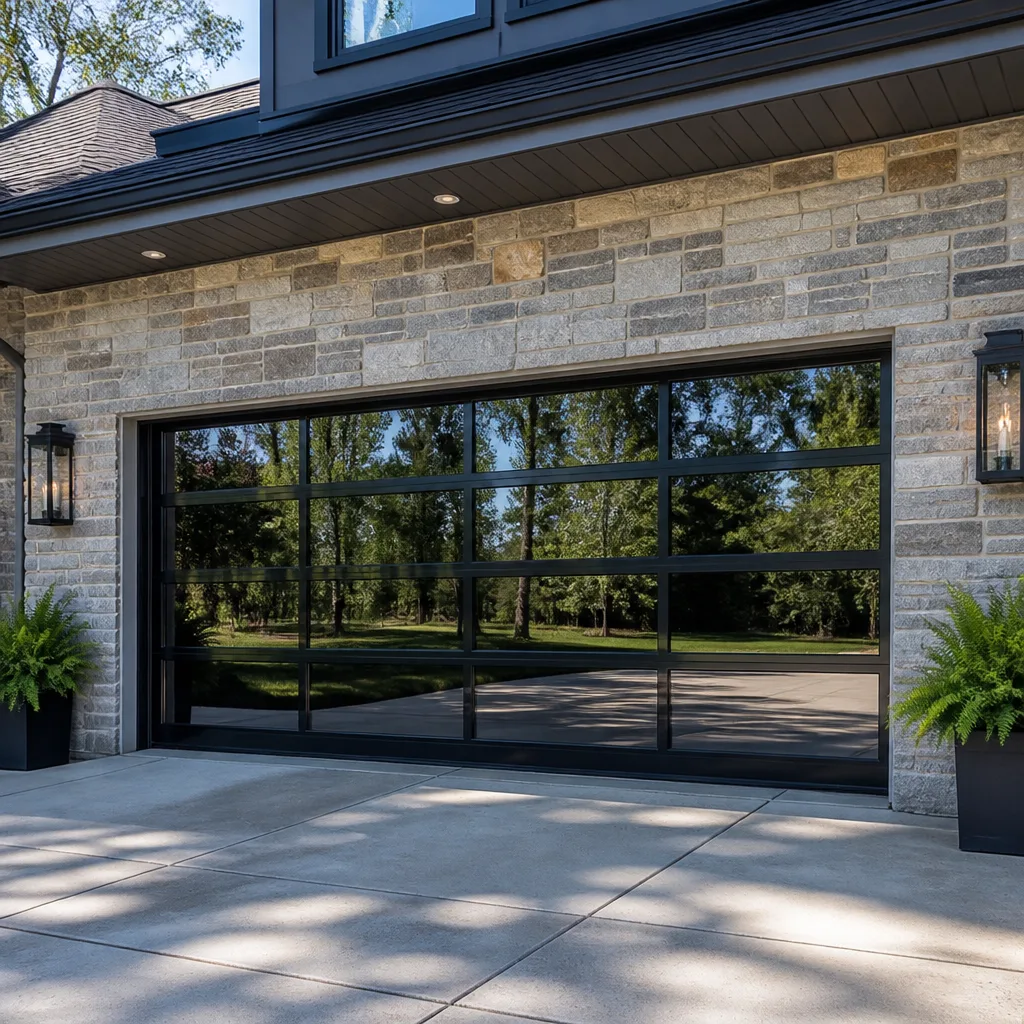 Full-view glass
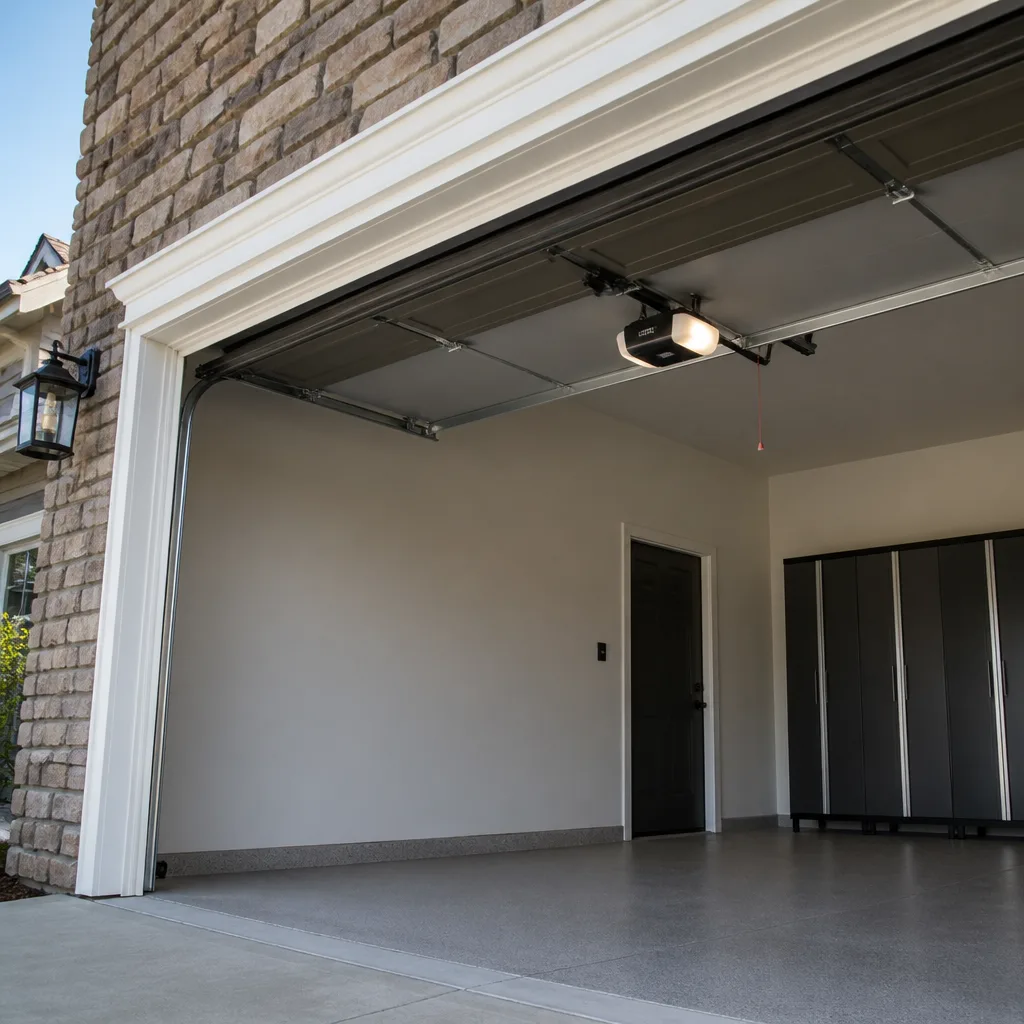 LiftMaster openers
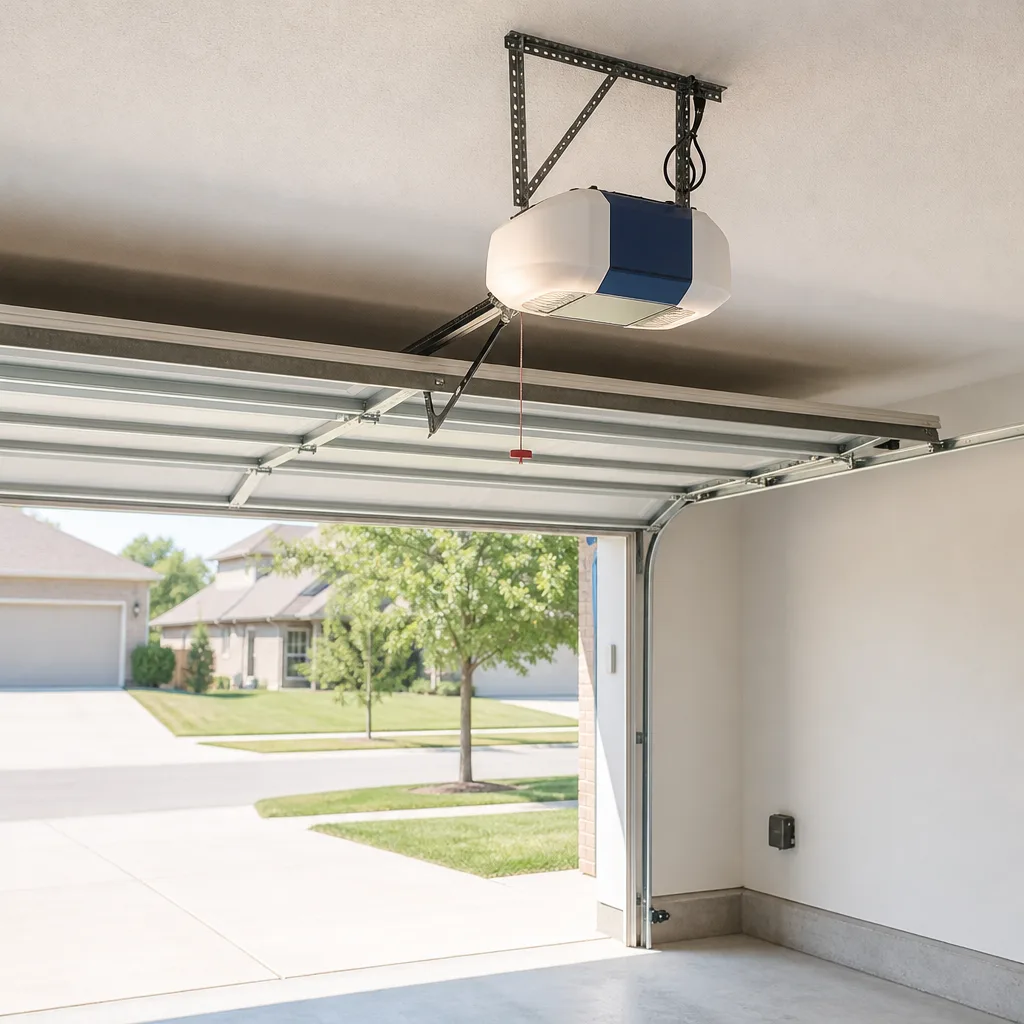 Chamberlain openers
Full 25-point door and opener safety check with every visit - springs, cables, rollers, tracks, and your LiftMaster or Chamberlain opener included
You get a price before we start. It does not change when the truck arrives.
Get your free estimateThe Complete Guide to Garage Door in West Covina
Most garage door advice online was written for zip codes that get snow, ice, and sub-zero winters. West Covina gets 287 days of sun a year and summer temperatures that routinely cross 100°F. That heat changes everything: springs fatigue faster, weatherstripping bakes and cracks, and the standard tract-home door sizes found across West Covina neighborhoods like Woodside, the Heights, and South Hills don’t match the national replacement-cost charts. This guide explains how West Covina’s specific conditions affect your garage door, what repairs actually cost in the San Gabriel Valley in 2026, and how to avoid paying for work you don’t need. For related reading, see our Garage Door Cost Breakdown: The West Covina Homeowner’s Reference for 2026. You’ll learn the difference between a tune-up and a repair, what a written price guarantee protects you from, and how to verify a contractor’s license before they ever step foot in your driveway.
Quick Answer
Garage door repair in West Covina typically costs between $120 and $350 for common fixes like cable replacement, sensor realignment, and panel repair, while spring replacement runs $150 to $290 per spring depending on type. A full door replacement for standard West Covina tract-home sizes (16-foot or 8-foot doors) usually lands between $1,200 and $2,800 installed, with Amarr and Wayne Dalton doors skewing higher for insulated models. Always get a written price before any work starts, verify the contractor holds an active California C-61/D28 specialty license, and expect heat-related spring wear to happen faster here than national averages suggest.
Styles & brands we work with
Table of Contents
- How West Covina’s Climate Actually Wears Out Garage Doors
- Tract-Home Door Sizes in West Covina and Why They Matter
- Tune-Up, Repair, or Full Replacement: Dollar Thresholds for 2026
- What a Written Price Guarantee Actually Protects You From
- How to Verify a C-61/D28 License in California
- What Spring Repair Costs in West Covina in 2026
- What You Can Safely Check Yourself (and What You Absolutely Shouldn’t)
- Common Mistakes to Avoid
- When to Call a Professional
- Frequently Asked Questions
How West Covina’s Climate Actually Wears Out Garage Doors
The biggest factor most national garage door guides miss is sustained heat. West Covina summers aren’t just hot for a day here and there. We get weeks where the temperature stays above 95°F, and the inside of an uninsulated garage can climb 15 to 20 degrees above outdoor air. That heat does three specific things to your door system.
First, torsion springs, the horizontal coils above the door that do most of the lifting, are metal under constant tension. Every cycle of heat expansion and overnight cooling introduces microscopic fatigue. In coastal climates, a standard torsion spring rated for 10,000 cycles might last 8 to 10 years. In West Covina and the wider San Gabriel Valley, we regularly see the same springs fail in 6 to 7 years because the added thermal stress compounds mechanical wear. When a spring snaps, it sounds like a gunshot, and the door becomes nearly impossible to lift manually.
Second, weatherstripping, the rubber seals along the bottom and sides of the door, bakes in direct sun. Most guides tell homeowners to replace weatherstripping every two to three years. In West Covina, we’ve seen bottom seals crack and split within 18 months on west-facing doors that catch full afternoon sun. Cracked seals let dust, leaves, and the occasional field mouse into the garage, and they raise your cooling bill if the garage is attached to the house.
Third, metal components expand and contract. Rollers, hinges, and the track itself shift by fractions of a millimeter with each thermal cycle. That’s enough to cause gradual misalignment, which shows up as a door that shudders, scrapes, or hangs slightly crooked over time. If you hear grinding when the door opens, that’s often a roller that’s been pushed out of alignment by repeated expansion and contraction.
West Covina’s dry, sunny climate means rust is less of an issue than in coastal cities. The bigger culprit here is UV degradation and thermal fatigue. Knowing that changes when you should schedule maintenance. Rather than waiting for a visible problem, a yearly tune-up in spring, before the first heat wave, catches weakened springs, cracked seals, and misaligned track sections before they become a breakdown.
Tract-Home Door Sizes in West Covina and Why They Matter
West Covina’s housing stock is dominated by tract homes built between the late 1940s and the 1980s. That matters for garage door pricing because tract builders standardized door sizes decades ago, and those dimensions don’t always match what today’s big-box retailers stock or what national cost guides assume.
The most common garage door size we encounter in West Covina is the 16-foot by 7-foot double door, found on most two-car garages in neighborhoods like Woodside, Valinda, and South Hills. Single-car garage doors are typically 9 feet wide by 7 feet tall, though in homes built in the 1970s and earlier, you’ll occasionally find 8-foot-wide doors. Height is usually 7 feet, but homes built on raised foundations sometimes have 8-foot-tall doors to accommodate a higher garage ceiling.
Why does this matter? Because replacement cost scales with door width and panel material. A standard 16-foot non-insulated steel door from a builder-grade line typically runs $1,200 to $1,800 installed in West Covina. Step up to an insulated steel door with an R-value above 10, and the price moves to $2,000 to $2,800. Wayne Dalton and Amarr both make doors in these exact dimensions, but the price difference between a base steel panel and an insulated model with a finished interior can be significant. If your garage is attached to the house and shares a wall with a bedroom or living space, the insulation starts to pay for itself in comfort within a few summers.
For families in the Heights or along the hills south of the 10 freeway, we also see custom doors on larger properties, some 18 feet wide or with arched tops. Those replacements are always measured and ordered, never pulled off a shelf, and the price reflects the custom work. Getting a written quote upfront is critical on any custom-size door because the per-square-foot cost shifts once you leave standard dimensions.
Tune-Up, Repair, or Full Replacement: Dollar Thresholds for 2026
One of the most useful ways to think about garage door service is to separate it into three categories. Each has a different price range, timeline, and decision point in West Covina’s 2026 market.
A tune-up is preventative maintenance: inspecting and adjusting the track, tightening hardware, lubricating springs and rollers, checking balance, and testing the auto-reverse safety mechanism. In West Covina, tune-ups generally run $75 to $150 depending on door size and condition. At Marlow Garage Door Repair West Covina home, we treat a tune-up as a diagnostic opportunity: we inspect for early spring wear, cracked seals, and misalignment that could become a $300 repair later. The goal is to catch problems while they’re still cheap.
A repair means something specific is broken and needs fixing. Common repairs in West Covina include broken springs ($150 to $290 per spring, installed), snapped cables ($120 to $200 per cable), bent track sections ($180 to $350), and sensor realignment ($95 to $150). A repair is almost always the right call when the door is less than 12 to 15 years old and the panels, motor, and track are in decent shape. The math favors repair when the total fix is under half the cost of a comparable replacement.
A full replacement becomes the better choice when three or more major components need work at once, the door is dented or rusted through in multiple panels, or the motor has failed on a door that’s already near the end of its expected life. The economic threshold for most West Covina tract homes in 2026 is roughly $800 to $1,000 in combined repairs. Once you’re spending that much to patch a 18-year-old door, replacement starts to look better on a per-year cost basis. A new 16-foot door costs $1,200 to $2,800 installed, comes with a manufacturer warranty, and typically includes new springs, cables, rollers, and track.
Here’s the quick decision framework we suggest:
- If the door is under 10 years old and one component failed, repair it.
- If the door is 10 to 15 years old and the repair total is under $600, repair it.
- If the door is over 15 years old and the repair quote exceeds $800, get a replacement quote too.
- If the door is dented, sagging, or noisy in ways that indicate structural fatigue, skip the repair and replace.
What a Written Price Guarantee Actually Protects You From
Every legitimate garage door service offers a “free estimate.” That phrase is nearly meaningless until you know whether the estimate is written or verbal, and whether it locks in the final price. A verbal estimate is a conversation. A written price is a commitment.
Here’s the scenario we hear about most often from West Covina homeowners who’ve had bad experiences with other companies: the technician arrives, looks at the door, says “should be around $125,” then disappears for a while and returns with a tablet showing a bill for $280. The extra charges are explained as “additional parts,” “labor adjustment,” or “unexpected complications.” The homeowner pays because the door is already disassembled, the truck is in the driveway, and they need the garage to close tonight.
A written price guarantee prevents that script. The price is quoted upfront, in writing, based on the actual condition of the door. If the number changes, the technician must explain why and get your approval before proceeding. At Marlow Garage Door Repair, our written price is locked before any work starts. The invoice at the end matches the number you agreed to. That’s not a courtesy; it’s our non-negotiable standard on every job, and it’s part of the 365-Day Done Right Promise that covers every repair we perform for a full year in writing.
The distinction matters even more in the context of spring replacement, where pricing transparency has historically been poor. Some companies quote one spring type and install another, or quote the spring but not the labor. A written price eliminates that ambiguity. You see the full number, broken down by part and labor, before you approve the work.
How to Verify a C-61/D28 License in California
Garage door installation and repair in California requires a contractor’s license issued by the Contractors State License Board (CSLB). The correct classification for garage door work is C-61/D28, a limited specialty license specifically for “doors, gates, and activating devices.” A general contractor license, a handyman registration, or a business license from the city is not sufficient to perform garage door repairs legally in West Covina.
Here’s how to check a license, and it takes under three minutes:
- Go to the CSLB website (cslb.ca.gov) and click “Check a License.”
- Enter the contractor’s name, business name, or license number.
- Confirm the license status is “Active” and not “Suspended” or “Expired.”
- Verify the classification includes C-61/D28 or a full D28 specialty. A general building contractor (B license) can technically oversee the work, but the D28 classification is the specific one for garage door systems.
- Check the license issue date. A recent license under a new business name may indicate a company that reincorporated after consumer complaints.
- Look for any disclosures: CSLB flags complaints, arbitration awards, and license actions on the same page.
Most West Covina homeowners never run this check. It takes less time than ordering a coffee, and it tells you whether the person walking up your driveway is legally allowed to touch your garage door. We encourage every homeowner to verify our license before we arrive. It’s the same standard we’d ask for if we were hiring someone to work on our own homes.
Beyond licensing, check for liability insurance and workers’ compensation coverage. If a technician gets injured on your property and the company doesn’t carry workers’ comp, you could be pulled into a claim. A legitimate operator will provide proof of insurance on request and won’t be defensive about it.
What Spring Repair Costs in West Covina in 2026
Spring replacement is the most common major repair we perform in West Covina, and it’s the one homeowners ask about most. Let’s break down the actual cost factors.
There are two types of springs used on residential doors: torsion springs, which mount horizontally on a metal bar above the door opening, and extension springs, which stretch along the track on either side. Torsion springs dominate in West Covina because most tract homes built here after 1960 used them, and they’re safer and smoother than extension systems.
Torsion spring replacement in West Covina typically costs $150 to $290 per spring, installed. The spread is driven by spring size and wire gauge, which engineers select based on the weight, width, and cycle rating of your specific door. A standard 16-foot door with a steel panel needs a heavier spring than a 9-foot single door with an aluminum panel. Galvanized springs, which resist corrosion better in garages that see moisture, cost more than oil-tempered steel.
Extension spring replacement runs $120 to $220 for the pair, installed. These are more common on older West Covina homes built before 1960, especially in neighborhoods like the original West Covina tract near downtown and along the 10 corridor.
Every spring has a cycle rating: the number of open-and-close operations it’s engineered to survive. Standard builder-grade springs are rated for 10,000 cycles. Upgraded springs rated for 25,000 or 50,000 cycles cost more upfront but fail far less often. Given West Covina’s heat-related spring fatigue, we recommend upgraded-cycle springs to most homeowners. The math works out to less money spent per year of service life.
Here’s the price table for context:
- Torsion spring, standard cycle (10,000 cycles): $150 to $220 per spring
- Torsion spring, upgraded cycle (25,000+ cycles): $220 to $290 per spring
- Extension springs, pair, standard cycle: $120 to $180
- Extension springs, pair, upgraded cycle: $180 to $220
- Labor for spring replacement only: $60 to $100 (often included in the spring price)
When both torsion springs are similar in age and one fails, we recommend replacing both. The second is almost certainly near the end of its life, and replacing them together costs less than two separate service calls. For more detail on this specific repair, see our Garage Door Spring Repair in West Covina guide.
What You Can Safely Check Yourself (and What You Absolutely Shouldn’t)
This section is going to be direct with you. There are things on a garage door you can safely inspect and maintain, and there are things that can seriously injure or kill you if you attempt to fix them without training. For help deciding what’s safe to tackle yourself, read our DIY vs Professional Garage Door: The West Covina Homeowner’s Decision Guide. The line is not subtle.
Safe to check yourself:
- Look at the weatherstripping along the bottom of the door. If it’s cracked, brittle, or pulling away, it needs replacement. This is a low-risk, low-cost fix.
- Listen to the door. A squeak from the hinges or rollers usually just needs lubrication. Grinding or popping is a different issue and means a call is warranted.
- Check the door balance. Disconnect the opener using the red emergency release handle (with the door closed), then manually lift the door halfway. If it stays in place, the springs are doing their job. If it drops or shoots up, the springs are failing. Do not attempt to adjust springs yourself.
- Test the auto-reverse safety feature. Place a roll of paper towels or a 2×4 on the floor in the door’s path. Close the door. If it doesn’t reverse immediately on contact, the safety sensor is misaligned or malfunctioning, and that’s a repair call.
Do not attempt yourself:
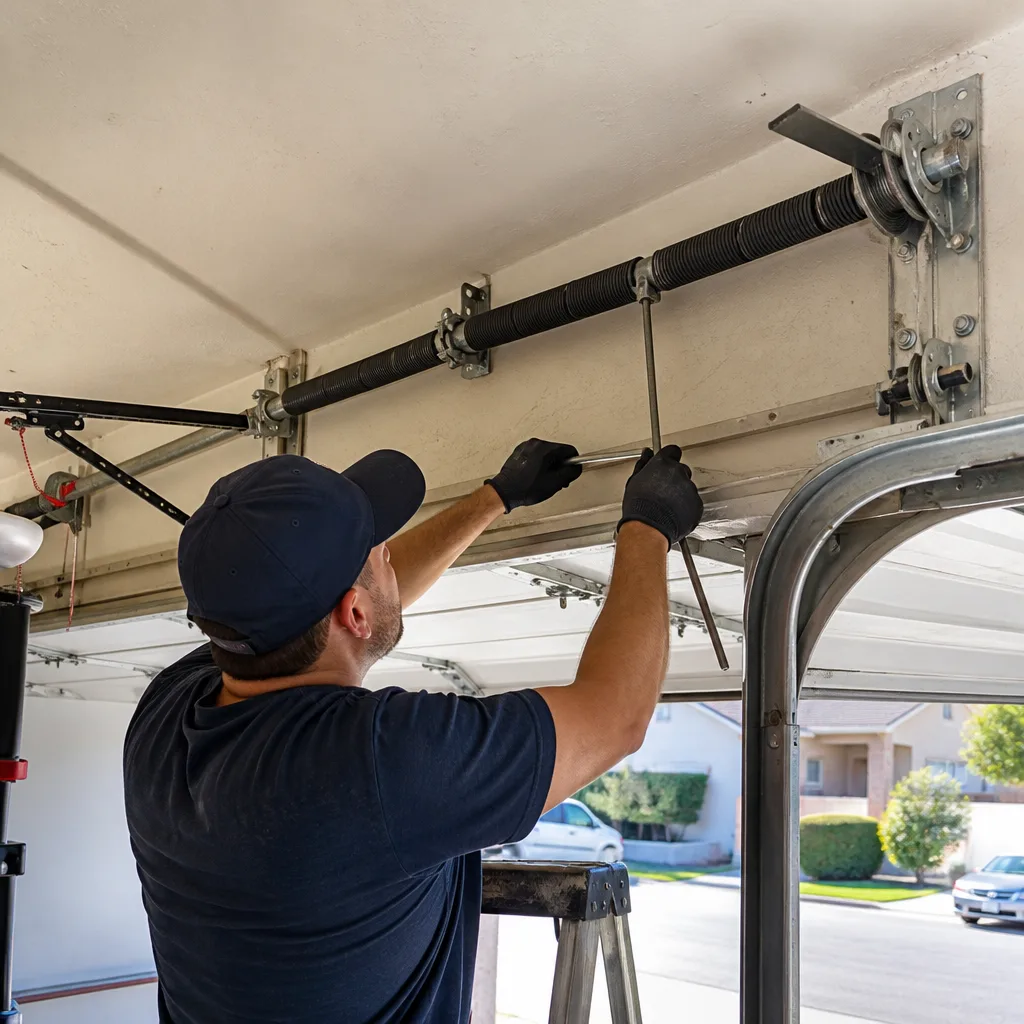
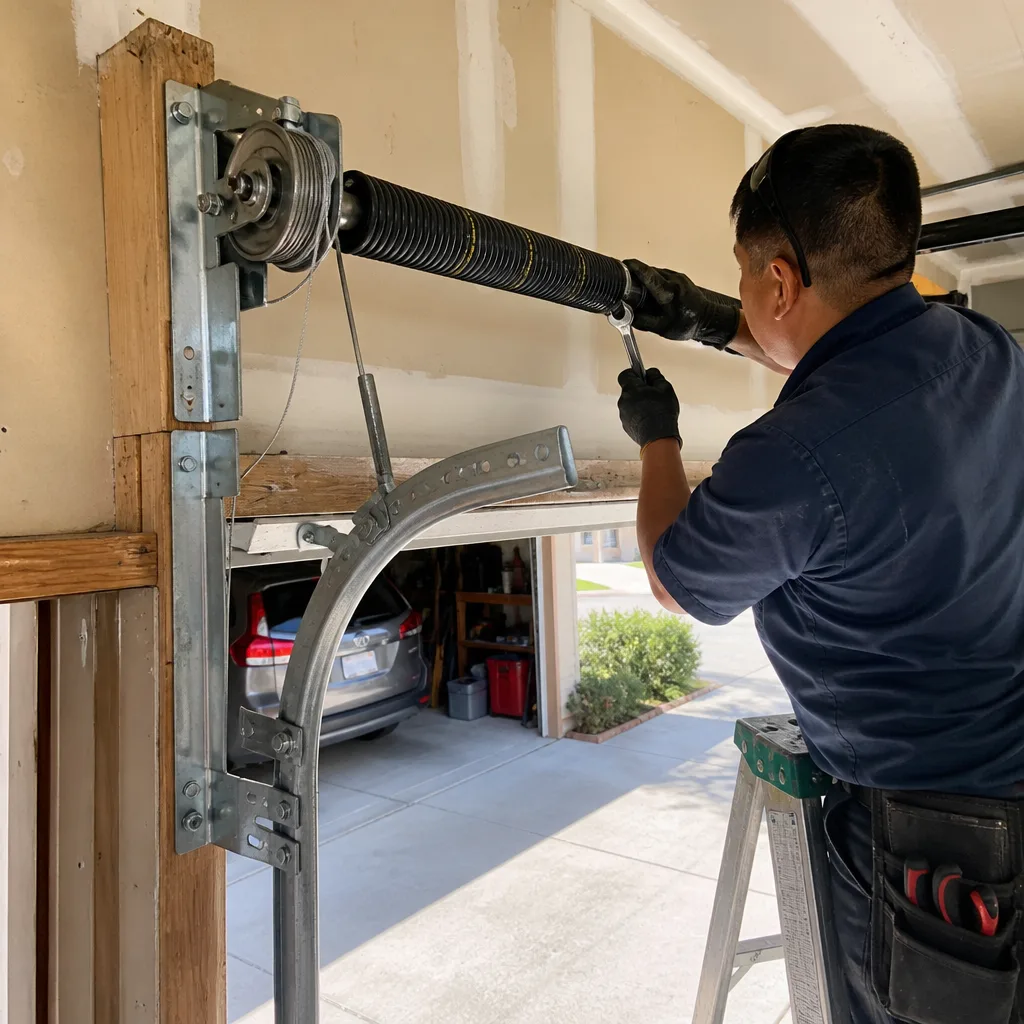
Garage door torsion springs are under extreme tension. A single torsion spring on a 16-foot door can hold hundreds of pounds of stored mechanical force. When one of those springs snaps during an amateur repair attempt, it releases that force in a fraction of a second. The injuries are severe: broken bones, deep lacerations, and worse. The winding bars used to adjust torsion springs can slip, and a slipped bar becomes a projectile.
Cables under tension are similarly dangerous. When a cable snaps, it whips through the air with enough force to cause serious injury to anyone nearby. Track work is less dangerous but still requires precise alignment to keep the door from binding or falling.
The bottom line: inspect, lubricate, and test. Do not repair springs, cables, or tensioned components yourself. The cost of a professional spring replacement ($150 to $290) is trivial compared to a trip to the emergency room. For cable issues specifically, see our Garage Door Cable Repair in West Covina page for what the repair involves and what it costs.
Common Mistakes to Avoid
- Ignoring a door that’s slower or noisier than usual. A door that suddenly takes longer to open or emits a groaning sound is signaling spring fatigue. Catching it before the spring fails costs less and avoids the risk of a door slamming down on a car or a person.
- Taking the cheapest quote without checking licensing. An unlicensed handyman might quote $80 for a spring repair, but you have no recourse if the spring fails two weeks later or the installer gets hurt on your property. Licensing and insurance exist to protect you.
- Replacing only one spring when two are worn. Spring fatigue follows a bell curve. If one torsion spring on a double-spring door has snapped, the other is usually within a few months of the same failure. Replacing both at once saves the second service call fee.
- Buying a replacement door from a big-box store and hiring a third party to install it. The per-unit price looks lower, but once you add freight, hardware, and separate installation labor, the total often exceeds a professional supply-and-install quote. Plus, you own the warranty problem if something’s wrong with the door.
- Skipping the written price step. A verbal estimate means nothing when the invoice arrives. Always insist on the price in writing before any work begins. If a company won’t give you one, treat that as a red flag.
- Waiting until the door fails completely to schedule service. A door that won’t open traps your car in the garage, and emergency service calls always cost more than scheduled repairs. West Covina’s summer heat means spring failures cluster in July and August. Scheduling a tune-up in May or June reduces your odds of a heat-wave breakdown.
- Using WD-40 on your garage door. WD-40 is a degreaser and solvent, not a lubricant. It strips away the factory grease and accelerates wear on rollers, hinges, and springs. Use a white lithium grease or a silicone-based garage door lubricant instead.
When to Call a Professional
Call a professional garage door technician when you hear a loud bang from the garage and the door won’t open, which almost always means a snapped spring. Call when the door hangs unevenly, shakes on the way up, or makes grinding noises that weren’t there a month ago. Call when the auto-reverse safety mechanism fails to respond to an obstruction. And call when you’re planning to sell your West Covina home – a smooth, quiet garage door is an easy selling point, and a loud, jerky one is an inspection item buyers notice.
Marlow Garage Door Repair West Covina offers free estimates throughout West Covina and the surrounding San Gabriel Valley. We’re trained on eight major garage door brands including Amarr, Wayne Dalton, and Raynor, and every repair is covered by the 365-Day Done Right Promise. Call (831) 216-7932 or book online – you’ll get a written price before any work starts.
Frequently Asked Questions
Most garage door repairs in West Covina cost between $120 and $350 depending on the component. Sensor realignment runs $95 to $150, cable replacement $120 to $200 per cable, and spring replacement $150 to $290 per spring. The exact price depends on your door’s size, spring type, and condition. Call (831) 216-7932 for a written quote – estimates are free, and the price we quote is the price you pay.
Yes, most common repairs including spring replacement, cable replacement, and sensor fixes can be completed the same day. Because we carry the most-used parts on our trucks and our technicians are trained on Amarr, Wayne Dalton, Raynor, and five other major brands, the tech who arrives is typically prepared to fix the door on the first visit. Call (831) 216-7932 to check availability for today.
Expect 6 to 7 years from standard torsion springs in West Covina, compared to 8 to 10 years in cooler coastal climates. The sustained summer heat causes thermal expansion cycles that fatigue spring steel faster. Upgraded springs with higher cycle ratings last longer, and we recommend them for most West Covina homes given the climate.
Not with Marlow Garage Door Repair. The written price you receive is locked before any work starts, and the invoice matches that number unless you approve additional work in writing in advance. If a company won’t commit to a written price, that’s a signal to look elsewhere.
Generally no for a direct replacement of an existing door in the same opening. Most garage door replacements in West Covina do not require a city permit, but if you’re altering the opening size, adding a new door where none existed, or modifying structural framing, you may need one. A licensed C-61/D28 contractor can advise you on whether your specific project triggers a permit requirement. For full details, see Garage Door Permits, Codes & Inspections in CA: What You Need to Know.
No. Torsion springs hold hundreds of pounds of tension and are dangerous to adjust without proper training and tools. Attempting a DIY spring repair carries serious risk of injury. Professional spring replacement costs $150 to $290 per spring in West Covina, a small price compared to the potential consequences of an amateur repair gone wrong.
The Bottom Line
Garage door decisions in West Covina should be made based on West Covina conditions, not generic national advice. The heat accelerates spring wear, the tract-home stock means standard door sizes that affect replacement pricing, and the difference between a written price and a verbal estimate is the difference between certainty and surprise. Check the license of any contractor you hire. Address small problems before they become breakdowns, especially in the summer months when spring failures cluster. And when you need work done, get the price in writing before a wrench turns. For Garage Door Repair in West Covina, call (831) 216-7932 and get a free written estimate from a team that’s been serving the area since 2002.
Written by Jaylen Ross, Owner at Marlow Garage Door Repair West Covina, serving West Covina since 2002. Explore more guides & resources on garage door care and repair.
See the difference
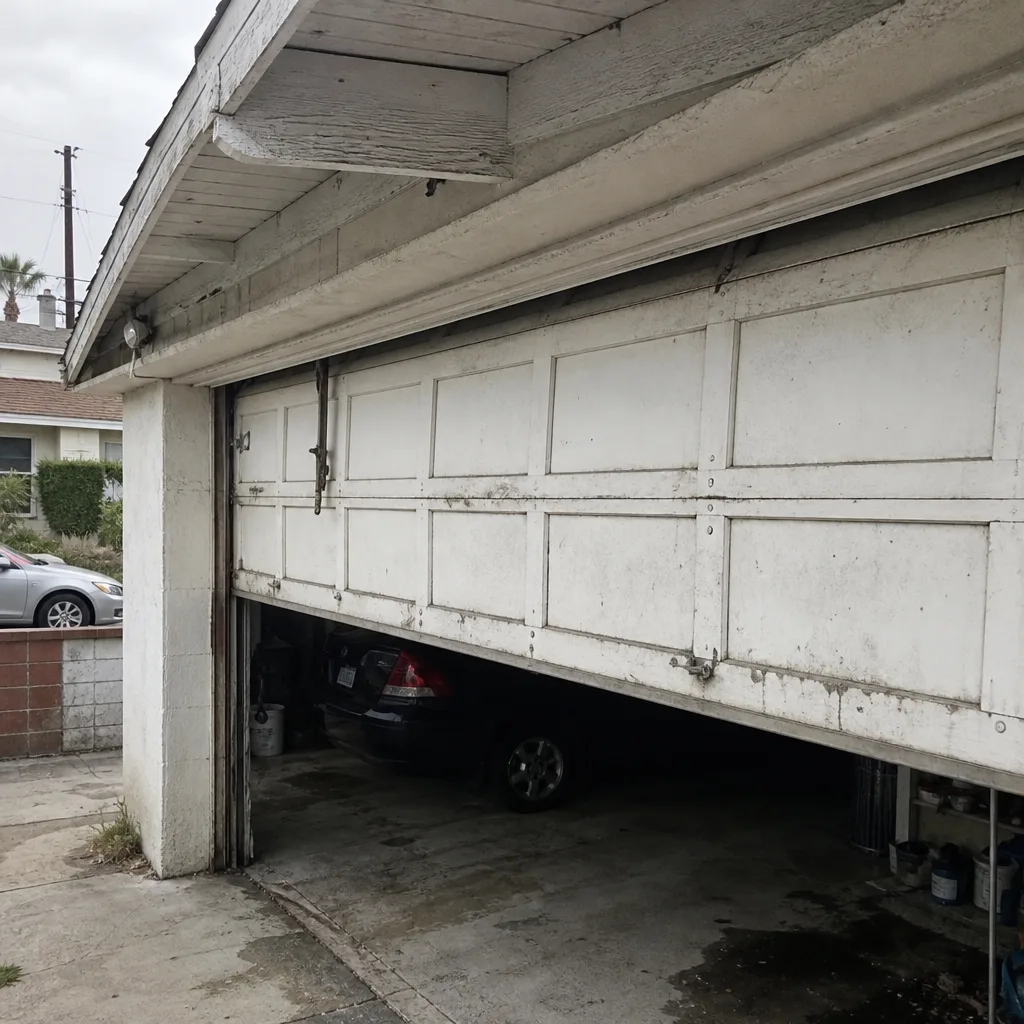 Before
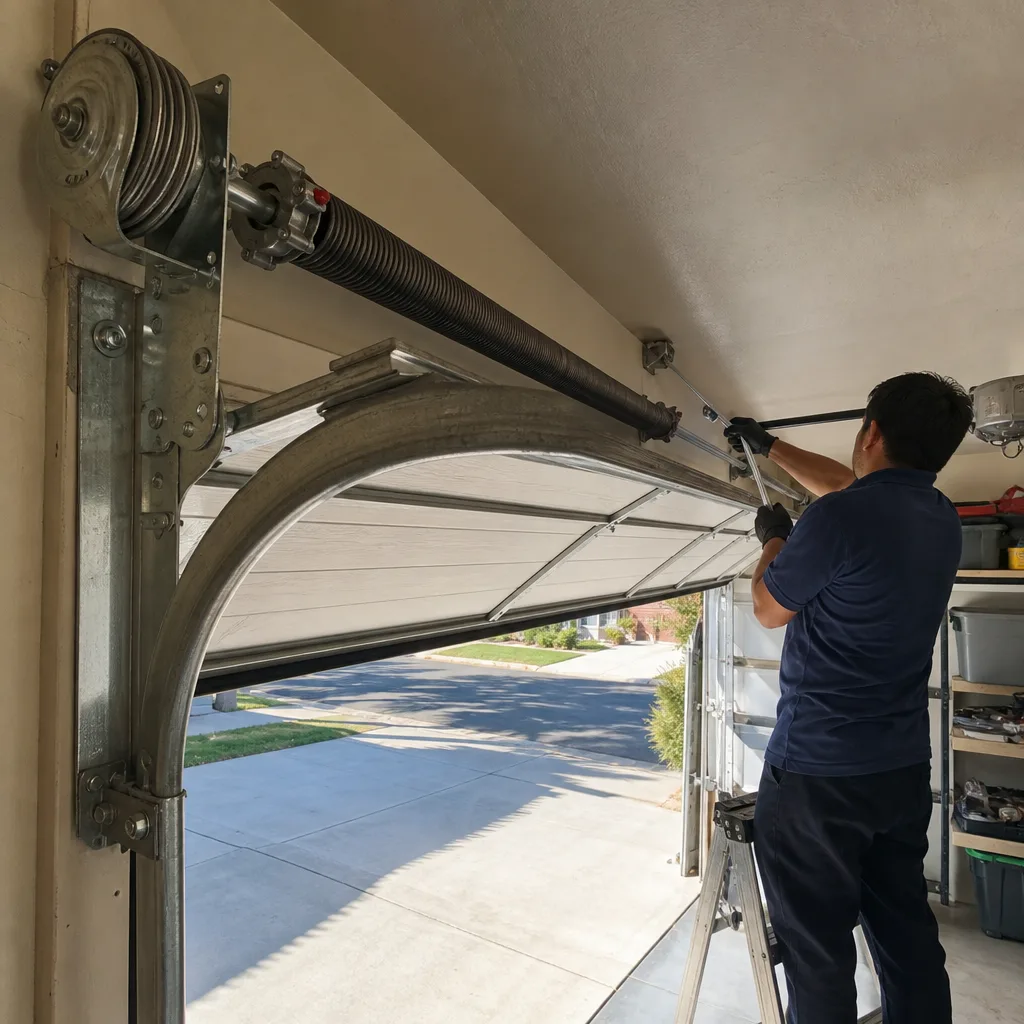 After
After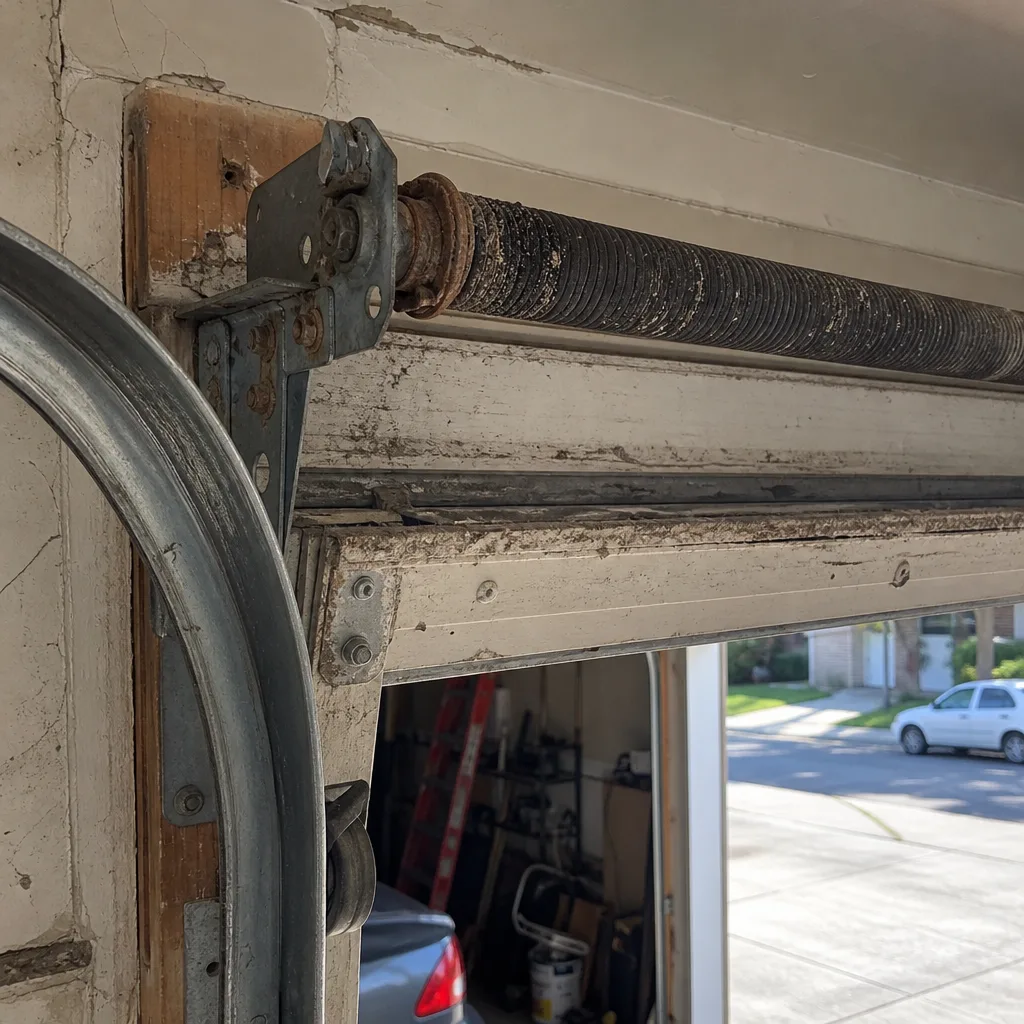 Before
 After
After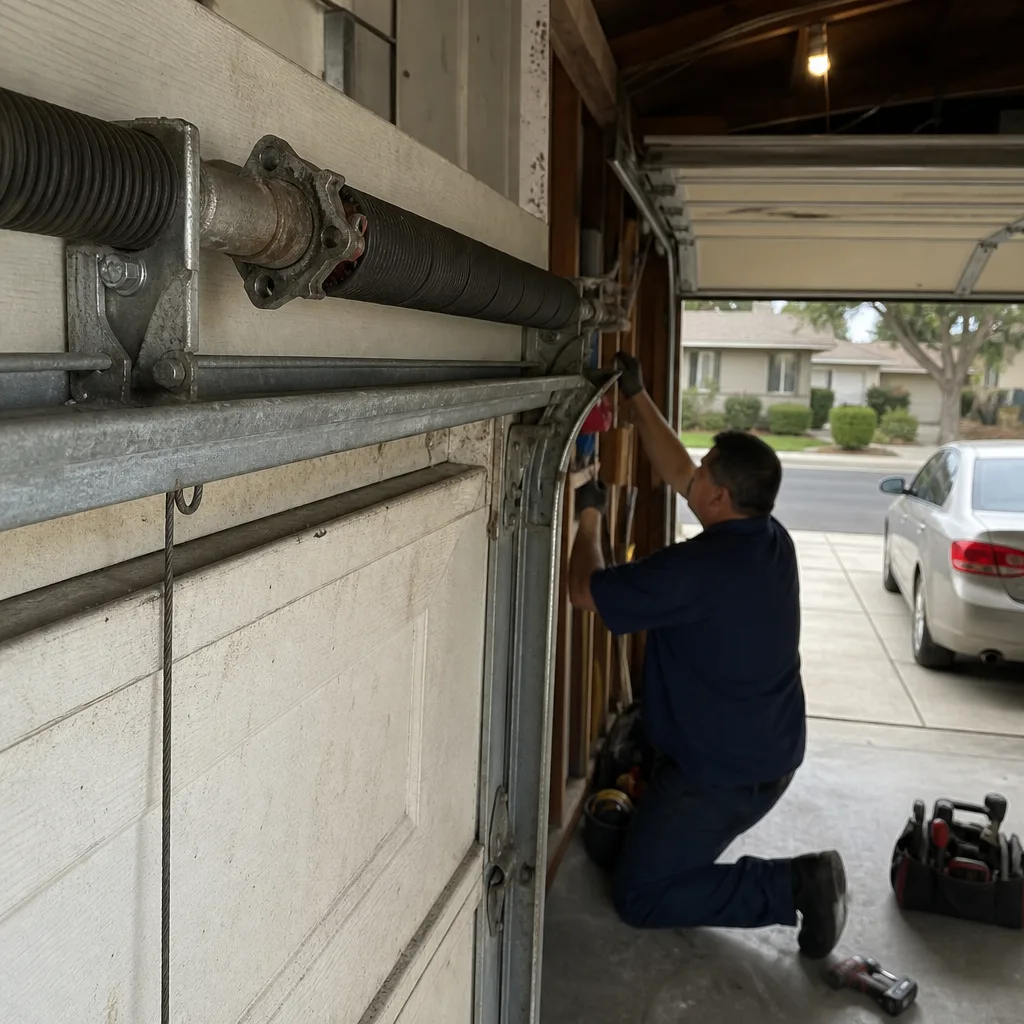 Before
 After
After