
Last updated October 16, 2026
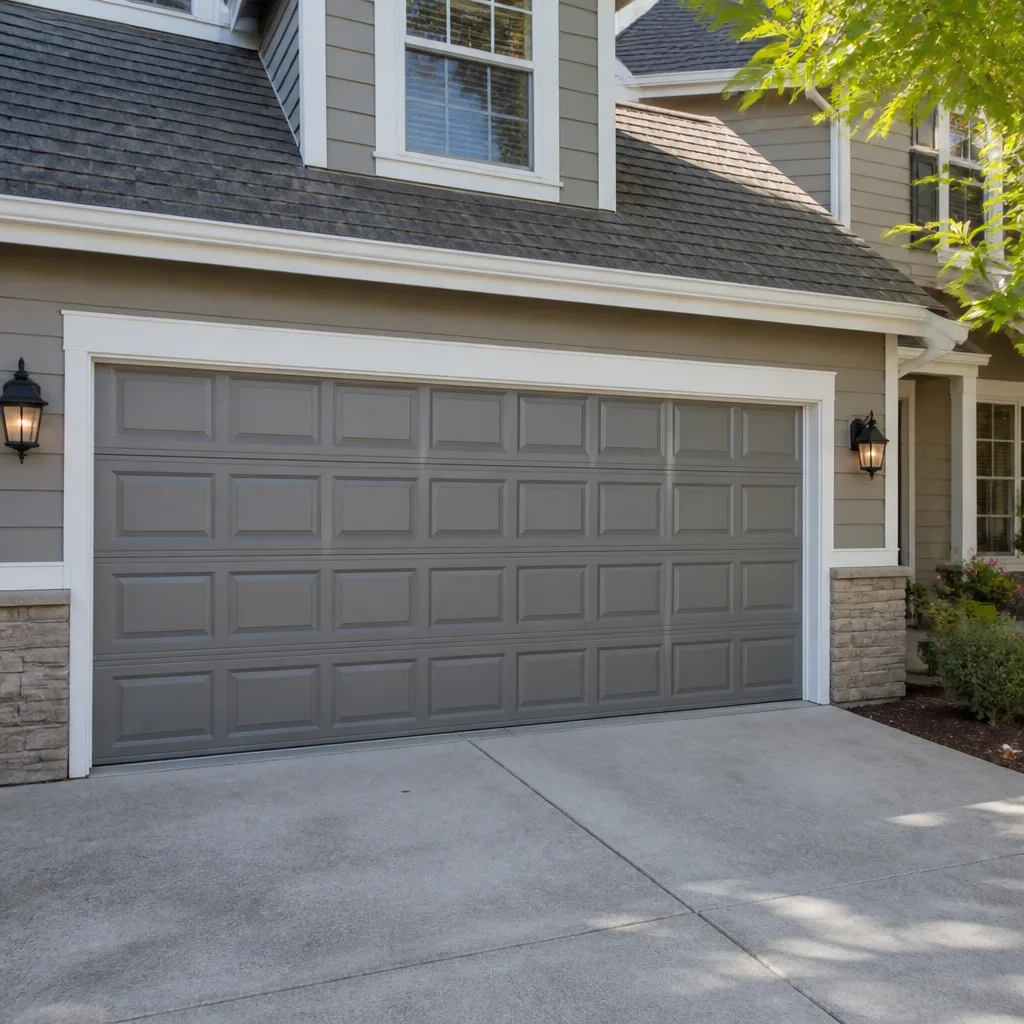 Raised-panel steel
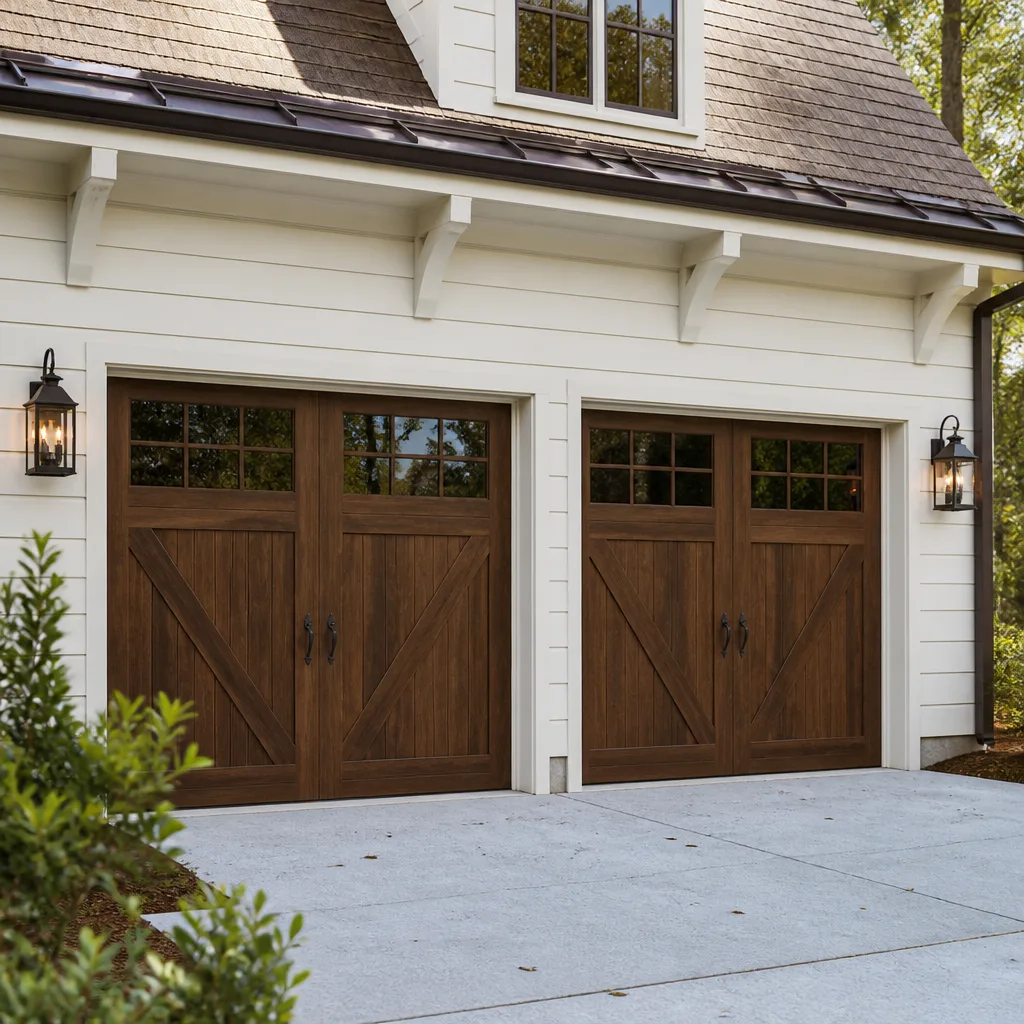 Carriage house
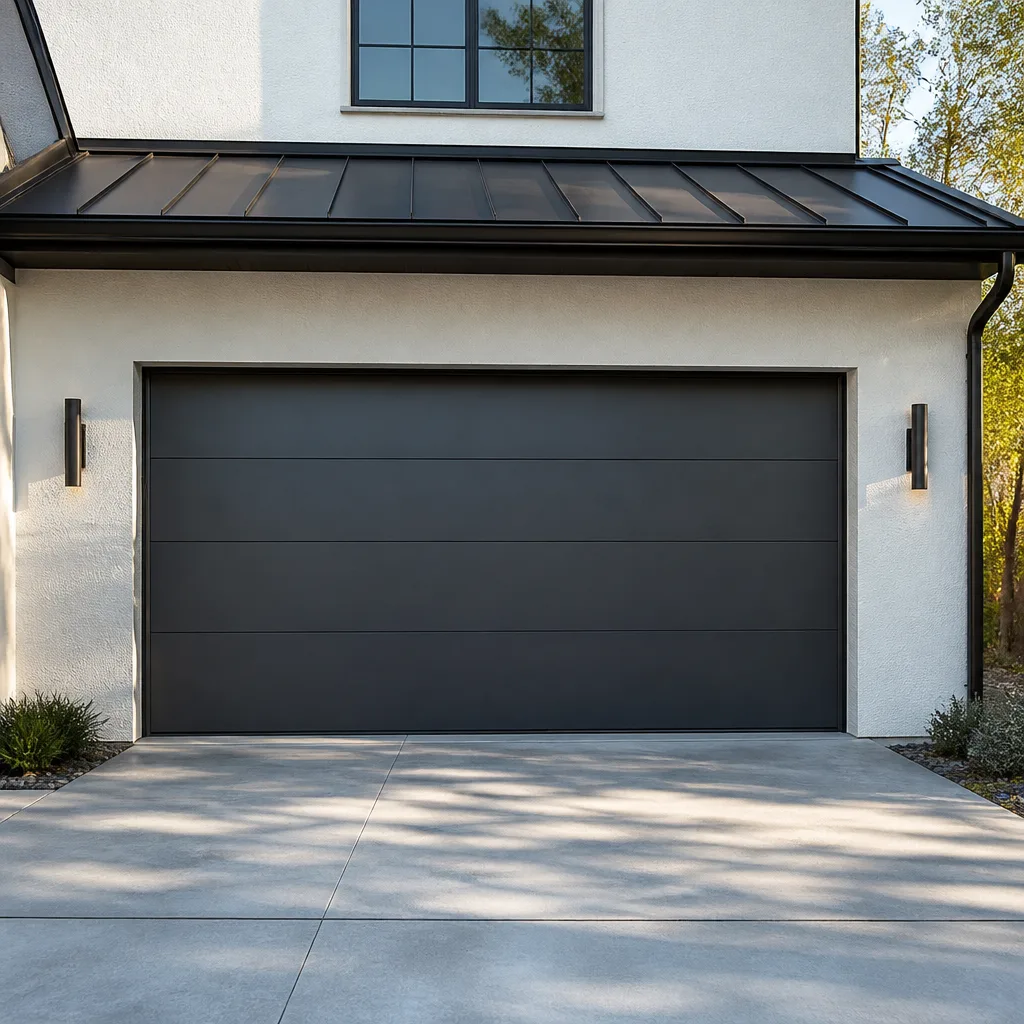 Modern flush
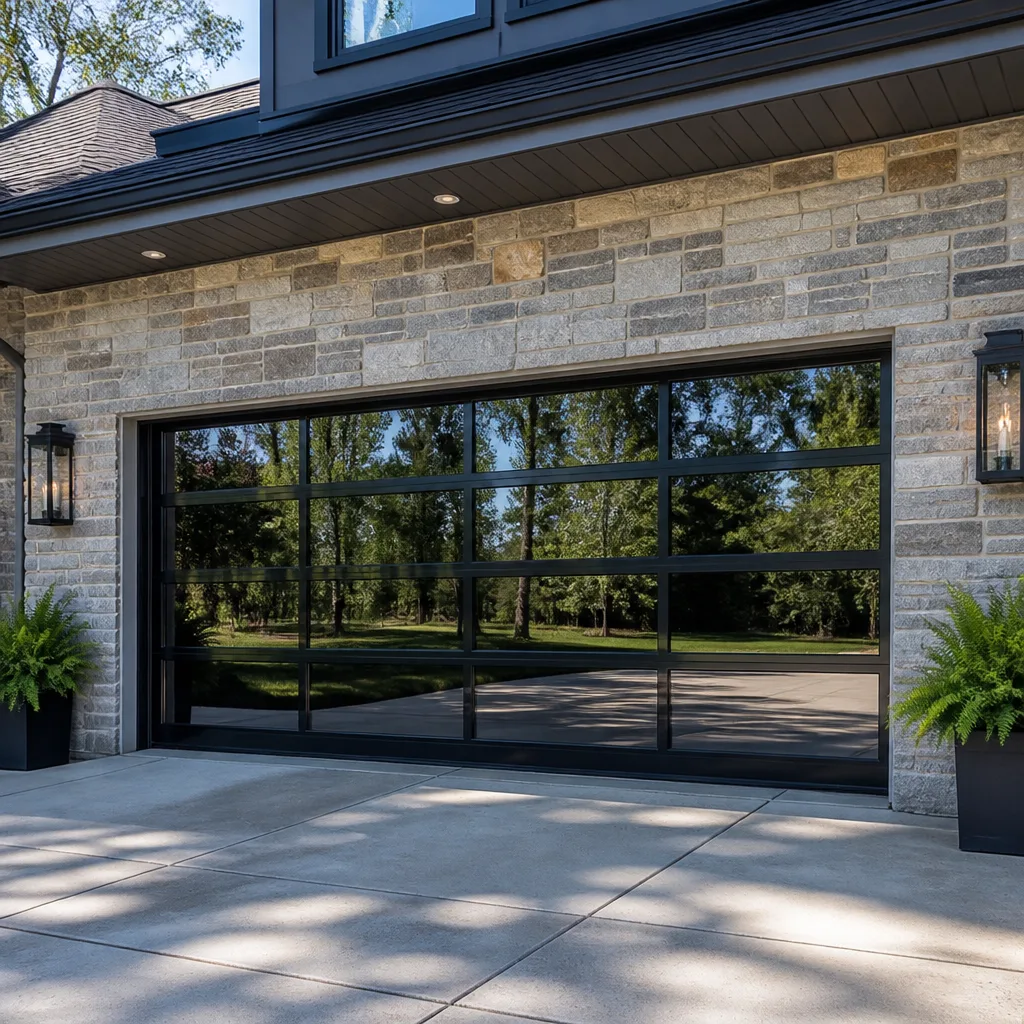 Full-view glass
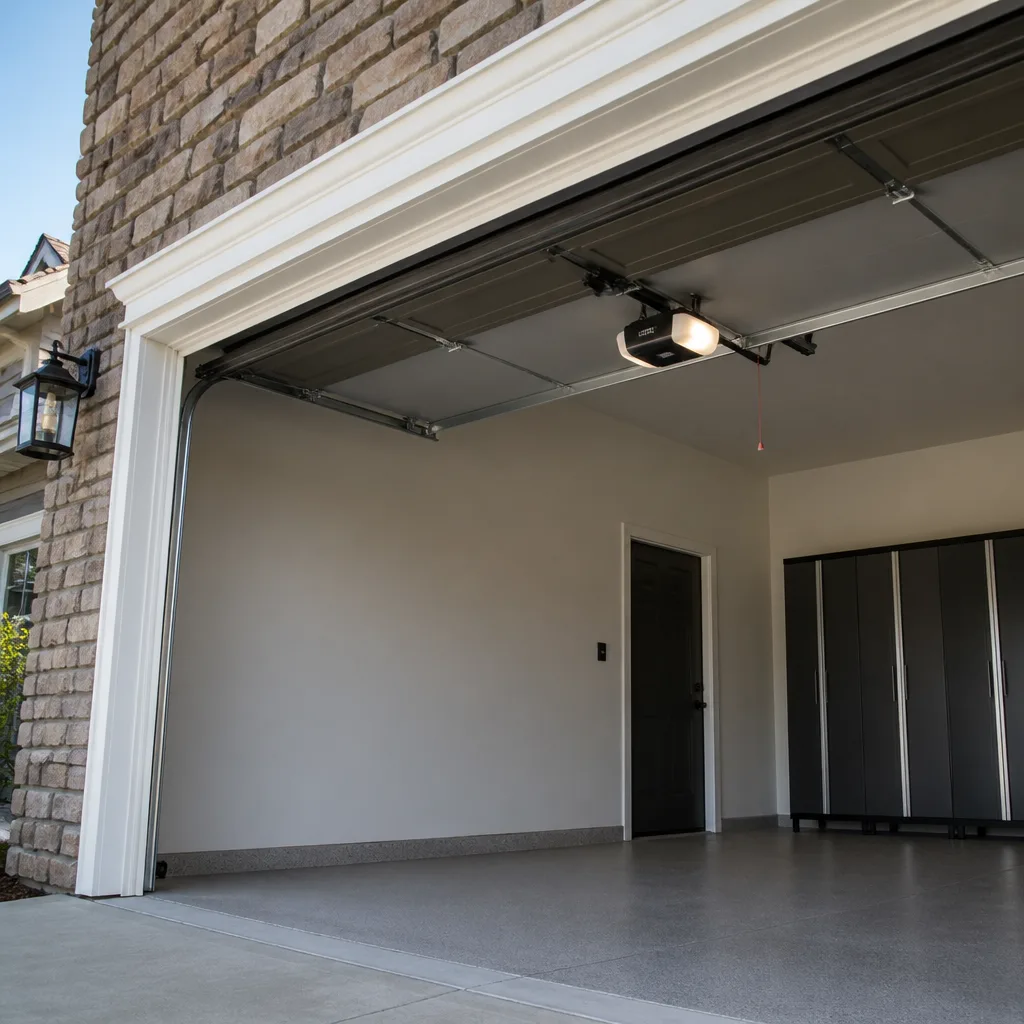 LiftMaster openers
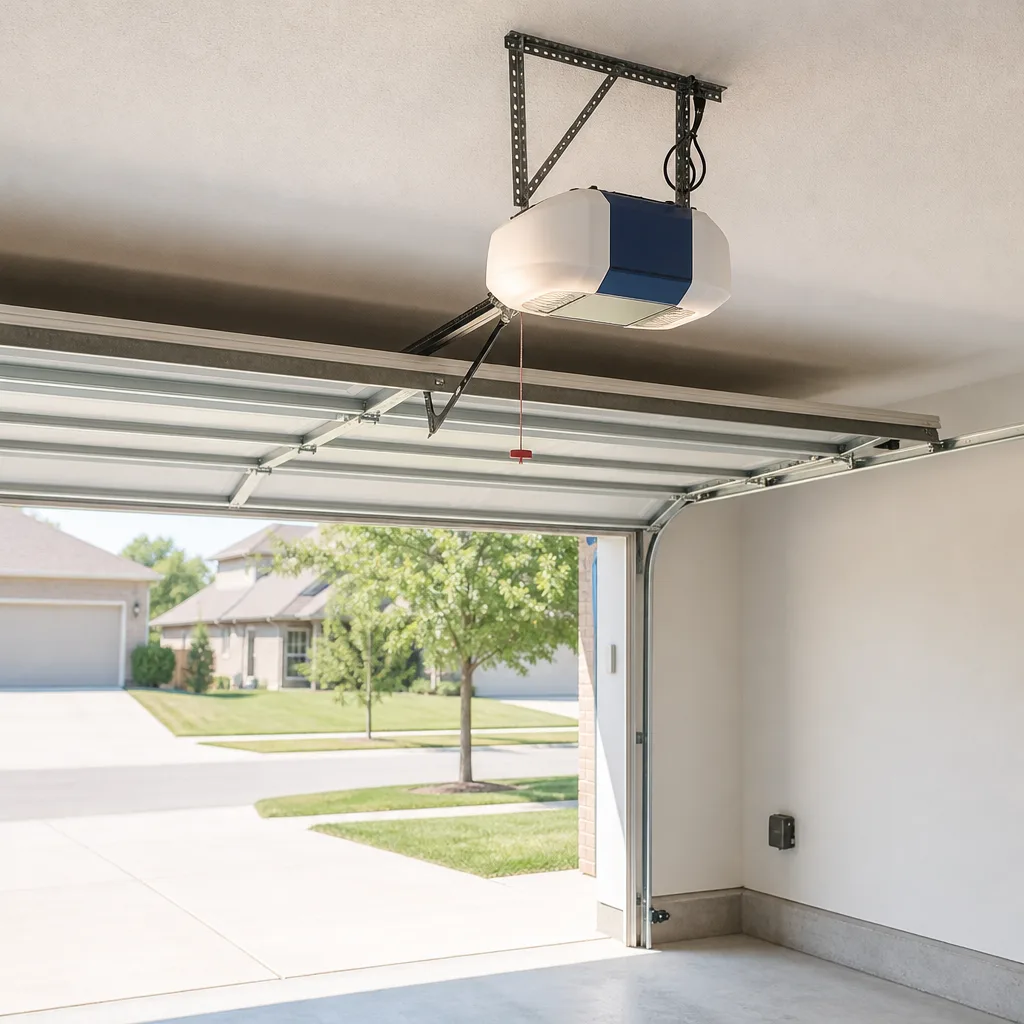 Chamberlain openers
Full 25-point door and opener safety check with every visit - springs, cables, rollers, tracks, and your LiftMaster or Chamberlain opener included
You get a price before we start. It does not change when the truck arrives.
Get your free estimateSeasonal Garage Door Care for West Covina: Year-Round Homeowner’s Guide
October in West Covina isn’t fall. It’s Santa Ana season. And while national garage door guides tell you to prep for snow and ice, the homeowners here know the real enemy: a hot, dry wind that throws debris into your tracks, strips lubrication from your rollers, and pushes your door sideways while the opener strains against it. This guide is built for the San Gabriel Valley climate, not a generic four-season template-see our Complete Guide to Garage Door in West Covina for the full picture. You’ll learn the four distinct stress periods your garage door faces each year in West Covina, what components fail during each one, and the specific maintenance tasks worth doing, in order, so you don’t waste a Saturday on things that don’t matter.
Styles & brands we work with
Quick Answer
Seasonal garage door care in West Covina means shifting your maintenance schedule with the Southern California climate: check rollers, tracks, and lubrication in March and April after winter dust settles; inspect weather seals and opener force settings in June before summer heat hits; clear debris and test balance during Santa Ana wind season from October through November; and re-lubricate moving parts once more in December when temperatures swing. A quick visual inspection every season, plus an annual torsion spring tension check in March, prevents most mid-season breakdowns that leave doors stuck mid-cycle.
Table of Contents
- Why West Covina’s Climate Is Harder on Garage Doors Than You Think
- West Covina’s Four Stress Periods: A Seasonal Breakdown
- March – May: The Dust and UV Reset
- June – September: Heat Management and Seal Checks
- October – November: Santa Ana Wind Preparation
- December – February: Mild-Cold Adjustments
- Common Mistakes to Avoid
- When to Call a Professional
- Frequently Asked Questions
- The Bottom Line
Why West Covina’s Climate Is Harder on Garage Doors Than You Think
West Covina sits in the eastern San Gabriel Valley, where summer temperatures routinely cross 95°F and winter nights occasionally dip into the low 40s. That’s a 50-degree spread over the course of a year, and sometimes a 30-degree swing in a single day. Your garage door’s steel panels, aluminum tracks, and torsion springs expand and contract with every shift. In colder climates, doors fail because ice and snow load them down. Here, they fail because the metal never gets a break from temperature-induced stress.
We see it every spring: torsion springs that snapped in November, right after the first big Santa Ana event. Homeowners assume the wind damaged the spring. What actually happened is more subtle. The spring had been losing tension for months through repeated expansion and contraction cycles. The wind event was just the final push. A spring tension check in early March would have caught the fatigue before it became a snapped coil above your car.
Low humidity is the second factor. West Covina averages under 18 inches of rain annually, and most of that falls between November and March. The rest of the year, the air is dry, and that dry air pulls moisture out of metal bearings, nylon rollers, and rubber seals. Lubricant evaporates faster here than in coastal communities. Seals dry out and crack. Owners who follow a “lubricate once a year” schedule from a national guide discover their rollers are grinding by August, because in West Covina, once a year isn’t enough.
The third factor is airborne dust. The San Gabriel Valley gets dust from construction, from the 10 and 60 freeways, and from the San Gabriel Mountains when the wind kicks up. That dust settles into the grease on your door’s tracks and hinges, turning lubricant into grinding paste. National guides don’t mention this because most of the country doesn’t deal with dry, dusty air as a year-round condition. West Covina does.
West Covina’s Four Stress Periods: A Seasonal Breakdown
Forget winter, spring, summer, and fall. Your garage door lives on a different calendar. Here’s how the year actually breaks down for door maintenance in West Covina, and what each period demands.
- March – May (Dust and UV Reset): Santa Ana season has passed, rain is ending, and the door has three months of accumulated grime from winter. This is the best window for deep cleaning, lubrication, and the critical spring tension check before peak use.
- June – September (Heat Management): The toughest stretch for seals, rollers, and opener electronics. High daytime temperatures put sustained expansion pressure on every metal component. Your job is to reduce friction and make sure the door isn’t fighting against warped seals or dry rollers.
- October – November (Santa Ana Prep): The single most dangerous period for West Covina garage doors. High winds load debris into tracks, push doors laterally, and expose any weakness in balance or spring tension. This is when we recommend a full safety inspection.
- December – February (Mild-Cold Adjustments): The mildest stress period, but not stress-free. Nighttime temperature drops cause metal contraction. Wood or composite doors shift slightly. This is the season to catch small misalignments before they become big ones.
March – May: The Dust and UV Reset
March is the most important maintenance month for West Covina homeowners, not because anything dramatic happens, but because nothing dramatic is happening. The wind has died down, the rainy season is wrapping up, and your door has a predictable few weeks before summer heat arrives. That predictability is exactly why you want to do the deeper maintenance tasks now, while you can work in comfort and catch issues before they become mid-summer breakdowns.
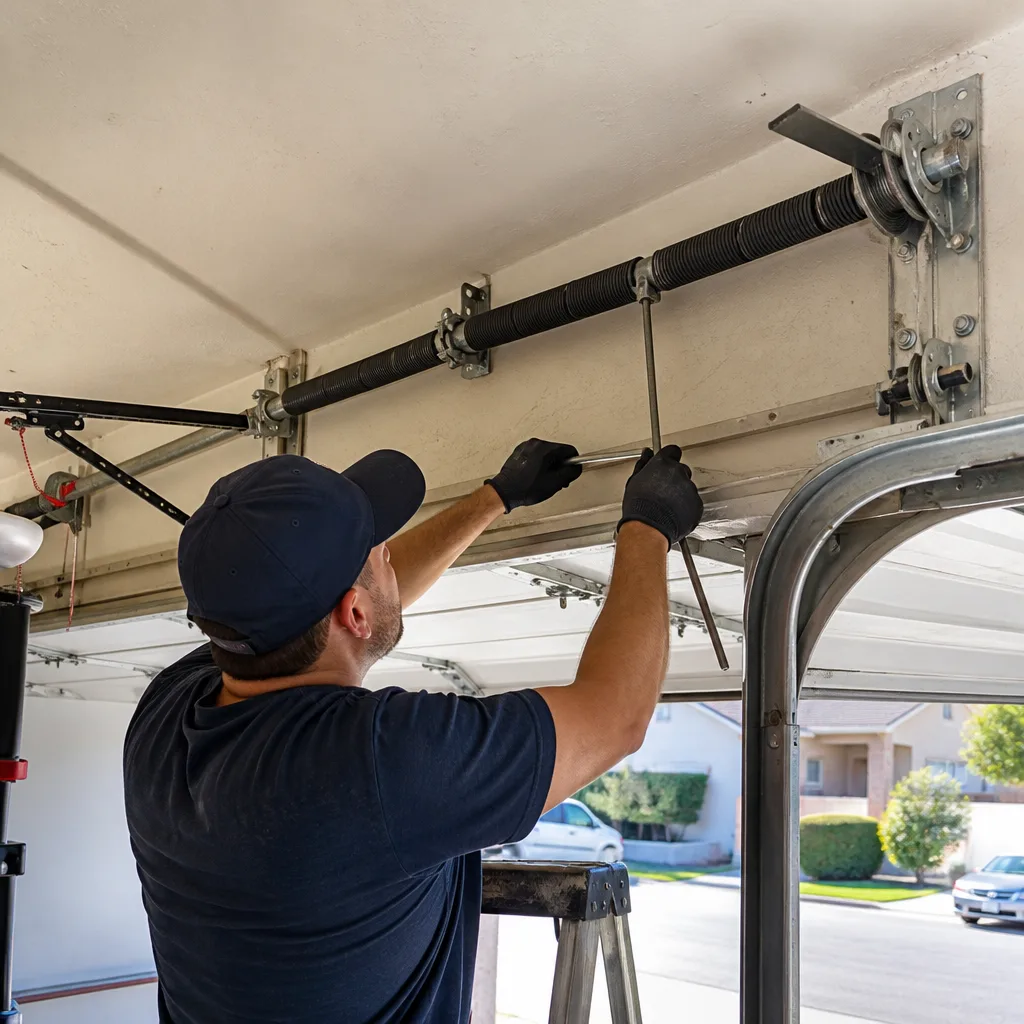
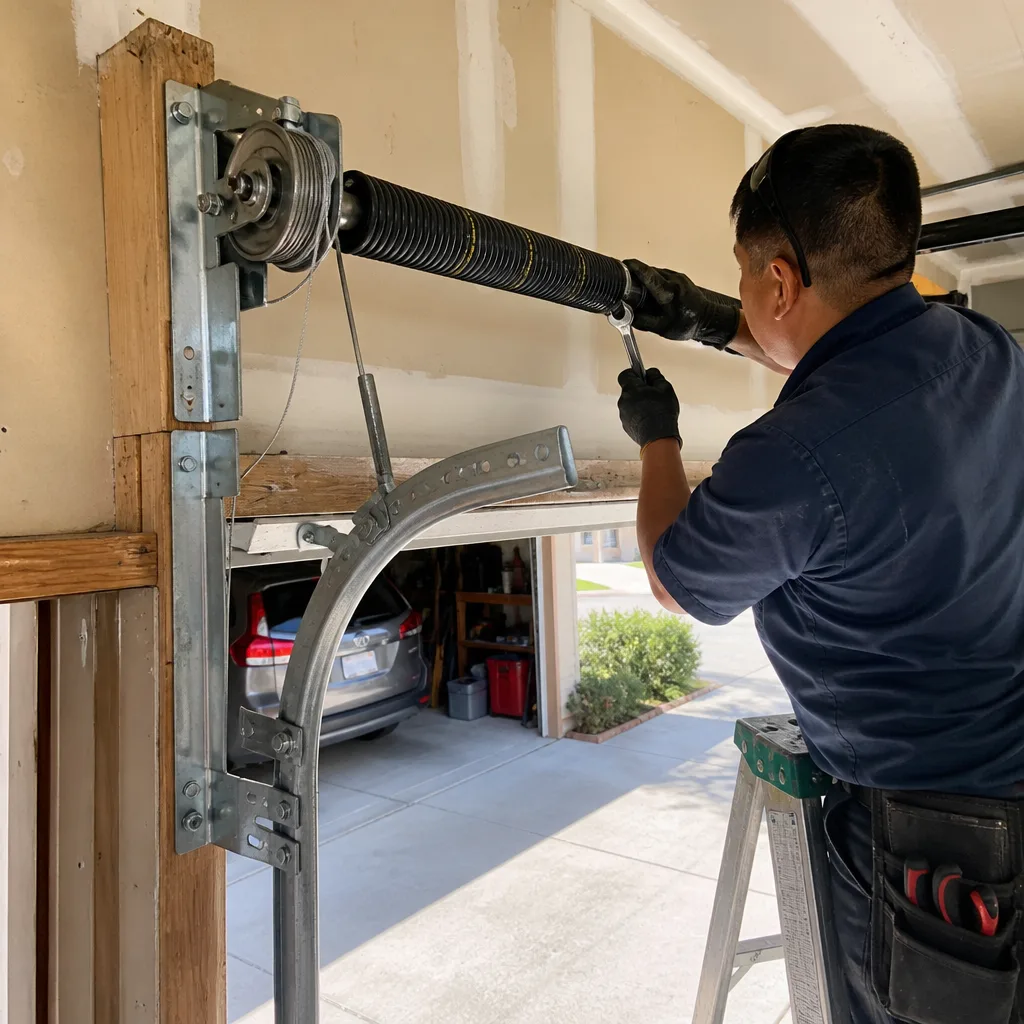
The March spring tension check. Torsion springs, the horizontal coils above your door that do most of the lifting, have a limited number of open-close cycles. Most residential springs are rated for 10,000 cycles, which translates to about seven to ten years of regular use in West Covina. The problem is that springs don’t fail suddenly without warning; they lose tension gradually over their final months. In March, before summer increases your door usage, is the ideal time to have the tension measured. A spring that’s lost 10% of its tension makes your opener work harder all summer, which shortens the opener’s lifespan and increases your electric bill. We’ve found doors in West Covina neighborhoods like Woodgate and South Hills that haven’t had a tension check in five years, and the springs are functionally worn out even though they haven’t snapped yet.
Deep clean the tracks and rollers. Winter dust, especially the fine sediment that blows in from the 10 Freeway corridor, accumulates in the vertical tracks. This grime mixes with old lubricant and becomes a thick paste that increases rolling resistance. Use a dry rag to wipe out the tracks, then apply a few drops of a silicone-based lubricant to the rollers and hinges. Avoid WD-40; it’s a solvent that strips away protective coating and attracts more dust. A silicone spray or white lithium grease lasts longer in dry SGV conditions.
Inspect UV damage on painted steel and vinyl doors. West Covina’s spring sun is already intense enough to fade paint and embrittle vinyl weather seals. Walk the perimeter of your door and look for peeling paint, chalky residue on your fingers, or hairline cracks in any vinyl components. Faded paint isn’t just cosmetic; once the factory coating wears through, the underlying steel starts to rust. A repaint in March, before summer UV gets worse, is a structural investment, not a style choice.
June – September: Heat Management and Seal Checks
Summer in West Covina is when your garage door works hardest. People open the door more often, keep the garage as a workspace or home gym, and the direct afternoon sun radiates onto the door surface for six to eight hours. A west-facing door in neighborhoods like Valinda or Galster Park can reach surface temperatures of 140°F or higher by 3 p.m. That heat transfers through the metal panels into the garage interior, and it also stresses every component attached to the door.
Check the bottom seal before the first heat wave. The rubber or vinyl strip along the bottom of your door keeps dust, leaves, and hot air from getting under. After a winter of dry air and a spring of UV exposure, that seal is usually cracked or compressed by June. Press your fingers along it and look for gaps where daylight shows through. A degraded bottom seal in summer means dust blows into your garage on every windy evening, and your garage temperature climbs even faster. In West Covina, where summer afternoons routinely hit triple digits, a functional bottom seal is the difference between a garage that’s 10 degrees warmer and one that’s 30 degrees warmer than outside.
Listen to the rollers. When the air is dry and hot, nylon rollers run quieter but wear faster if they’re not lubricated. Metal rollers survive heat better but transfer more vibration to the track. If your door squeaks while opening in July, that’s metal-on-metal contact, and it’s accelerating wear on both the roller and the track. A quick lubrication session in June takes 15 minutes and saves you a roller replacement later in the summer. Roller replacements are quick fixes, but if the track gets scored from grinding, the repair bill goes up.
Opener force settings drift in high heat. Garage door openers have a force setting that controls how much effort the motor applies when pulling the door. This setting is calibrated at installation. But extreme heat causes expansion, and expansion changes the perceived resistance. An opener that was correctly balanced in April might work too hard in August, or not hard enough. The opener isn’t broken; it just needs a seasonal adjustment. If your door reverses on the way down during a hot afternoon, this is nearly always the cause. A calibration check in June prevents a lot of August service calls, and it’s a simple adjustment for anyone with a step ladder and a screwdriver.
October – November: Santa Ana Wind Preparation
This is the period that national garage door maintenance guides simply don’t address. Santa Ana winds are a Southern California phenomenon: hot, dry winds that blow from the northeast, sometimes gusting to 60 mph or more in the San Gabriel Valley. They kick up in October and can persist through November. For West Covina garage doors, Santa Ana season is the single highest-risk period of the year.
Here’s what happens during a Santa Ana event. High winds hit the door face directly, especially on north- and east-facing garages in neighborhoods like Azusa-Cameron and Merced. The wind loads the door sideways, pushing the panel against the track. If the door is unbalanced or the tracks are slightly misaligned, the door can jam mid-travel. The opener keeps pulling, the motor strains, and either the door comes off its track or the opener’s internal gear strips. Both are expensive repairs, and both are avoidable with a pre-Santa Ana inspection.
The Santa Ana checklist:
- Clear debris from the tracks. Santa Ana winds carry leaves, twigs, and the fine dust from the San Gabriel foothills. Debris that lands in the bottom track corners blocks roller movement and causes the door to hang up.
- Test the door balance. Pull the emergency release cord and manually open the door about three feet. If it stays in place, the springs are balanced. If it drops, the springs are losing tension, and the next wind event may finish them off. Re-attach the cord and call a professional if the door drops.
- Check the weather seals on all three sides. The side seals, called weatherstripping, keep wind-blown dust from entering the garage. When they degrade, Santa Ana events deposit a layer of grit on everything you store in the garage.
- Inspect the opener force setting. The added wind load changes the force needed to move the door. An opener calibrated for calm conditions may stall or reverse when the wind pushes against the panel. A seasonal force adjustment keeps the opener from fighting the wind.
- Tighten all visible hardware. Bolts and brackets loosen over time, especially with repeated expansion and contraction. Walk the door track and tighten every nut you can see. Loose hardware during a wind event turns minor vibration into metal fatigue.
We’ve replaced more torsion springs in October and November than any other months, and most of those springs showed signs they were failing for months before the wind arrived. The wind isn’t the cause; it’s the trigger. A spring tension check in March and a balance test in early October are the two highest-value maintenance tasks a West Covina homeowner can perform.
December – February: Mild-Cold Adjustments
West Covina winters are mild by national standards, but the garage door still notices the temperature change. Nighttime lows in the 40s and occasional drops into the upper 30s cause metal contraction. That contraction changes the alignment of tracks that were perfectly straight in August. It also makes wood and composite doors shrink slightly, which can create small gaps around the edges.
Re-lubricate moving parts once more. The dry fall air and Santa Ana winds have stripped away much of the lubricant you applied in spring. A second lubrication pass in December, just on the rollers, hinges, and springs, keeps the door running smoothly through the mild cold spell. This is a five-minute task that extends the life of every moving component.
Inspect for water intrusion. West Covina’s rainy season runs from November through March, and while total rainfall is low, the storms can be intense when they arrive. A garage door that appears sealed in dry weather can leak during a heavy downpour if the bottom seal is cracked or the side weatherstripping has pulled away. Stand inside the garage during the next rain and look for light or water under the door edges. Minor seal replacements in December prevent mold and rust issues in February.
Watch for sticking in the morning. On cold mornings, the door may hesitate or stick for the first few inches of travel. This is normal contraction behavior, but it shouldn’t persist once the door has cycled once or twice. If the door sticks consistently, the tracks may have shifted during the fall, and a track realignment is worth scheduling before the problem worsens. Wood doors in West Covina tend to be older installations, and they’re more sensitive to cold-weather contraction than modern steel doors from Clopay or Amarr.
Common Mistakes to Avoid
- Lubricating with WD-40. WD-40 is a solvent, not a lubricant. It removes rust and grime but leaves the metal dry and attracts dust, which is the opposite of what you want in West Covina’s dusty air. Use a silicone spray or lithium grease formulated for garage doors.
- Skipping the spring tension check because the door “works fine.” Springs lose tension gradually. A door that works fine in February can still have springs that are near the end of their cycle life. The tension check is how you catch it before the spring snaps on a Saturday morning.
- Ignoring a loud door during Santa Ana season. A door that suddenly gets louder in October is telling you something. The added wind load is exposing a balance or alignment problem. Waiting until the door stops working entirely turns a $150 adjustment into a $600 repair.
- Repainting without removing rust first. Paint over rust doesn’t stop the rust; it hides it. The rust continues to spread under the new paint. Wire-brush the rust, apply a rust converter, then prime and paint. Skipping those steps in West Covina’s dry climate means the job looks fine for a year, then the panel rusts through.
- Tightening the opener force setting to compensate for a heavy door. If your door has gotten harder to open, the problem is usually the springs losing tension, not the opener setting. Crank up the force and you burn out the opener motor while masking the real issue. Fix the spring tension, then re-calibrate the opener.
- Replacing a single spring instead of both. If one torsion spring breaks, the other is probably close behind. Both springs have cycled the same number of times. Replacing only the broken one means the old spring will fail soon after, and you’ll pay for a second service visit.
- Neglecting the side seals because they “look fine.” Weatherstripping degrades from the inside out. A seal that looks intact can be brittle and cracking underneath. Run your hand along it; if it flakes or feels stiff, it needs replacing before the next Santa Ana event.
When to Call a Professional
Some maintenance tasks are safe and sensible for homeowners: lubrication, visual inspections, seal replacement, and hardware tightening. For everything else, read our DIY vs Professional Garage Door: The West Covina Homeowner’s Decision Guide. But certain situations demand a trained professional, not because you can’t do the work, but because getting it wrong creates a safety risk or a bigger repair bill. If your torsion spring has snapped, call a professional immediately. The spring is under hundreds of pounds of tension, and attempting to replace it without the right tools and training can cause serious injury. The same goes for cable issues. A frayed cable is a sign that the entire lifting system is out of balance, and working on cables without releasing spring tension is dangerous. If your door has come off its track during a Santa Ana wind event, forcing it back into place can bend the track and damage the rollers. Marlow Garage Door Repair West Covina offers free estimates in West Covina, and a quick phone call to (831) 216-7932 gets you a written price before any work starts. If the door sticks, makes grinding noises, or fails to open halfway, make the call rather than making the problem worse.
Frequently Asked Questions
In West Covina’s dry, dusty climate, lubricate your garage door rollers, hinges, and springs every three to four months. That means a spring application in March, a mid-summer touch-up in July, a pre-Santa Ana lubrication in October, and a final pass in December. This schedule compensates for the faster lubricant evaporation and higher dust accumulation common in the San Gabriel Valley.
The most important seasonal task is the spring tension check in March. Catching spring fatigue before summer usage and fall wind stress saves you from a snapped spring during Santa Ana season, which is the most common major garage door failure in West Covina. This check costs far less than an emergency spring replacement.
Yes. Santa Ana winds push sideways against the door panel, adding load that the door’s balance and the opener’s force setting weren’t necessarily designed to handle. A door that’s slightly off balance will bind against the track in high wind, and the opener will strain trying to move it. Over multiple wind events, this sideloading bends tracks, strips gears, and snaps weakened springs. An early October balance test is the best protection.
You may notice the door feels heavier when opened manually, the opener sounds strained, the door doesn’t stay in place when opened halfway, or there’s a visible gap in the spring coil. Any of these signs means a spring is losing tension or has already broken. If a spring has snapped, do not attempt removal yourself; the stored tension is extremely dangerous. Call (831) 216-7932 for a spring inspection and a written quote before any work begins.
Start with the bottom seal and side weatherstripping. A garage door with intact seals traps less hot air and blocks the dust that compounds heat retention. Also check that your rollers are lubricated, because friction heat adds to the ambient load inside the door mechanism. If your door faces west, consider a lighter paint color on the exterior surface to reflect some of the afternoon sun.
Yes, because cold-weather contraction still affects your door even when temperatures don’t reach freezing. The overnight lows in the 40s cause metal tracks to contract slightly, and that small shift can turn a minor alignment issue into a binding problem. Winter in West Covina is also the rainy season, so a check of your bottom seal and side seals before heavy rain prevents water damage inside the garage.
The Bottom Line
Your West Covina garage door lives on a different calendar than the rest of the country. March is your deep-cleaning and spring-check month. June is for seal inspection and opener calibration before the heat. October is for Santa Ana prep, which means balance testing, track clearing, and hardware tightening. December is a low-effort re-lubrication and water-intrusion check. None of these tasks take more than an afternoon, and they collectively prevent the mid-season breakdowns that leave you with a car trapped in the garage and an emergency repair bill. If you want a second set of eyes, a free estimate, or a written price before any work starts, Marlow Garage Door Repair West Covina is one phone call away at (831) 216-7932. You can also browse more guides & resources on our blog.
Written by Jaylen Ross, Owner at Marlow Garage Door Repair West Covina, serving West Covina since 2002.
See the difference
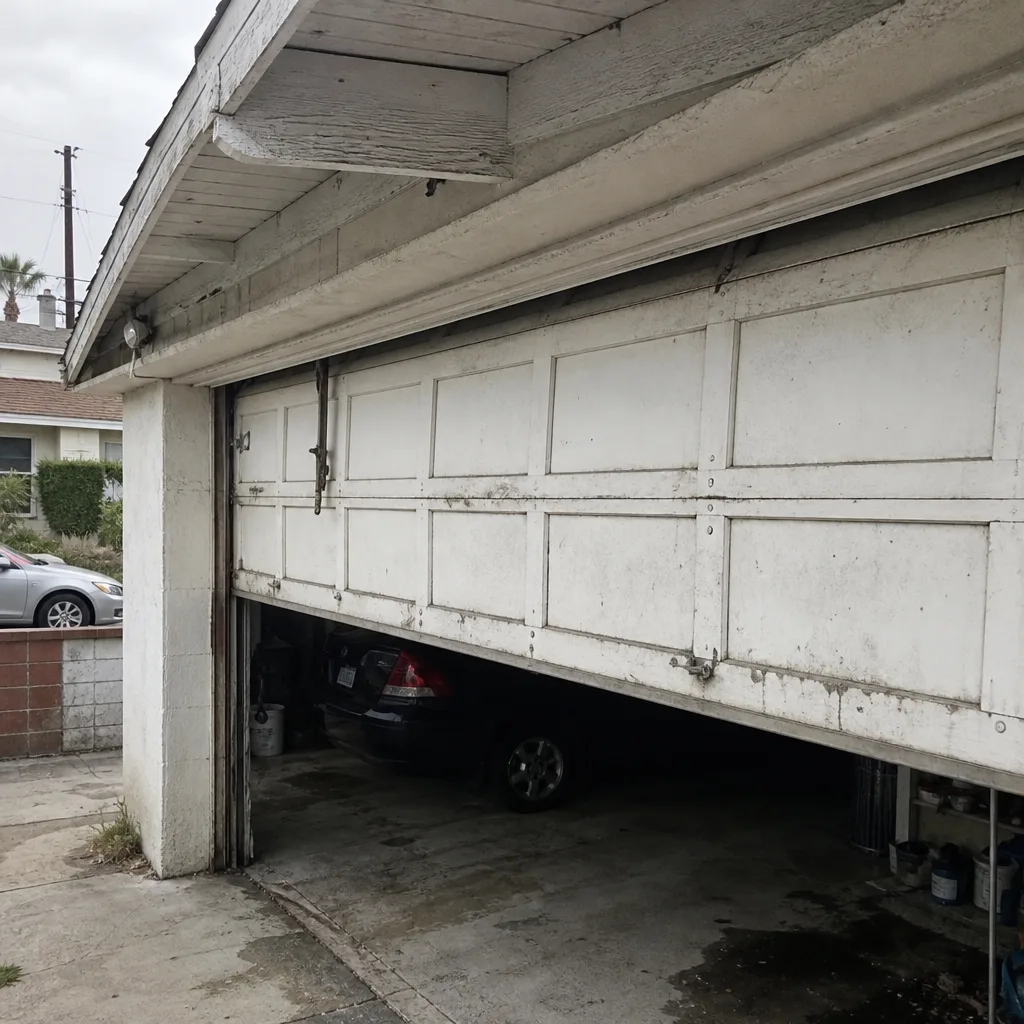 Before
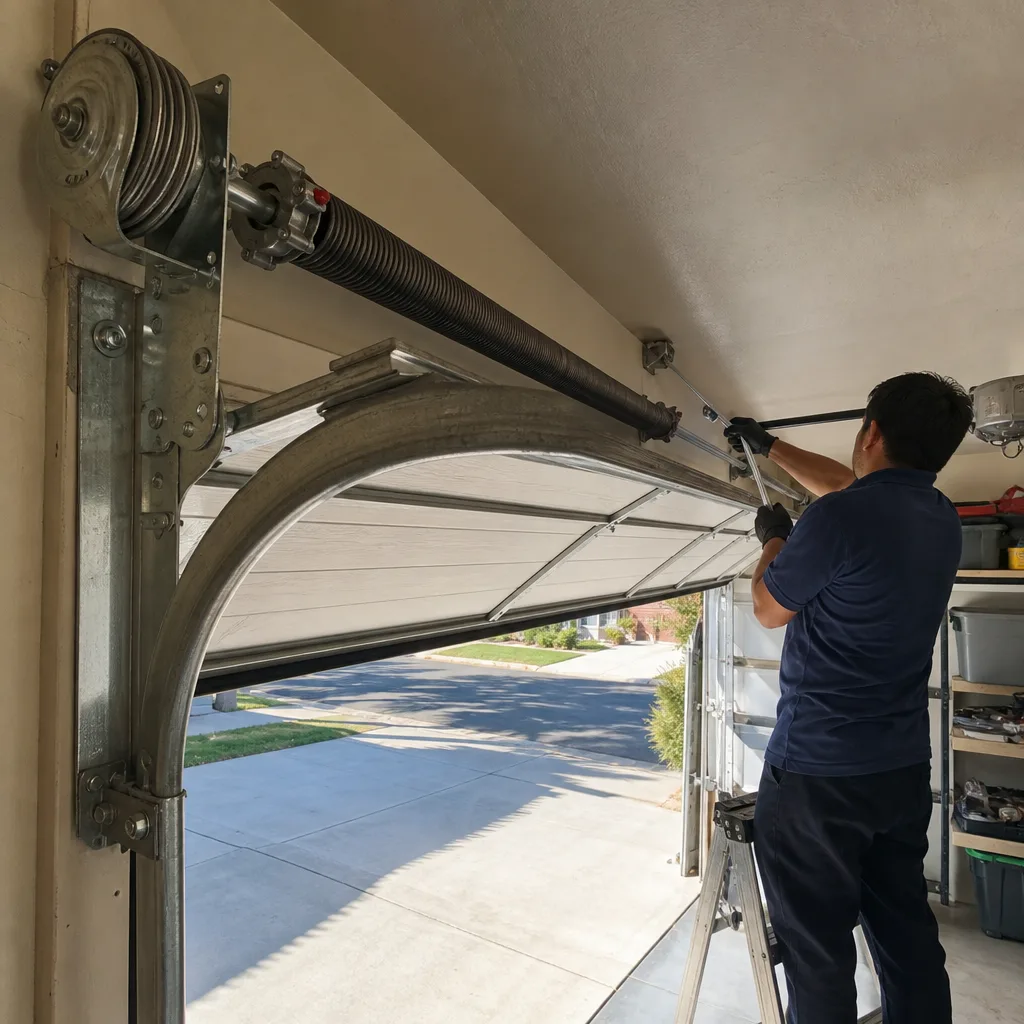 After
After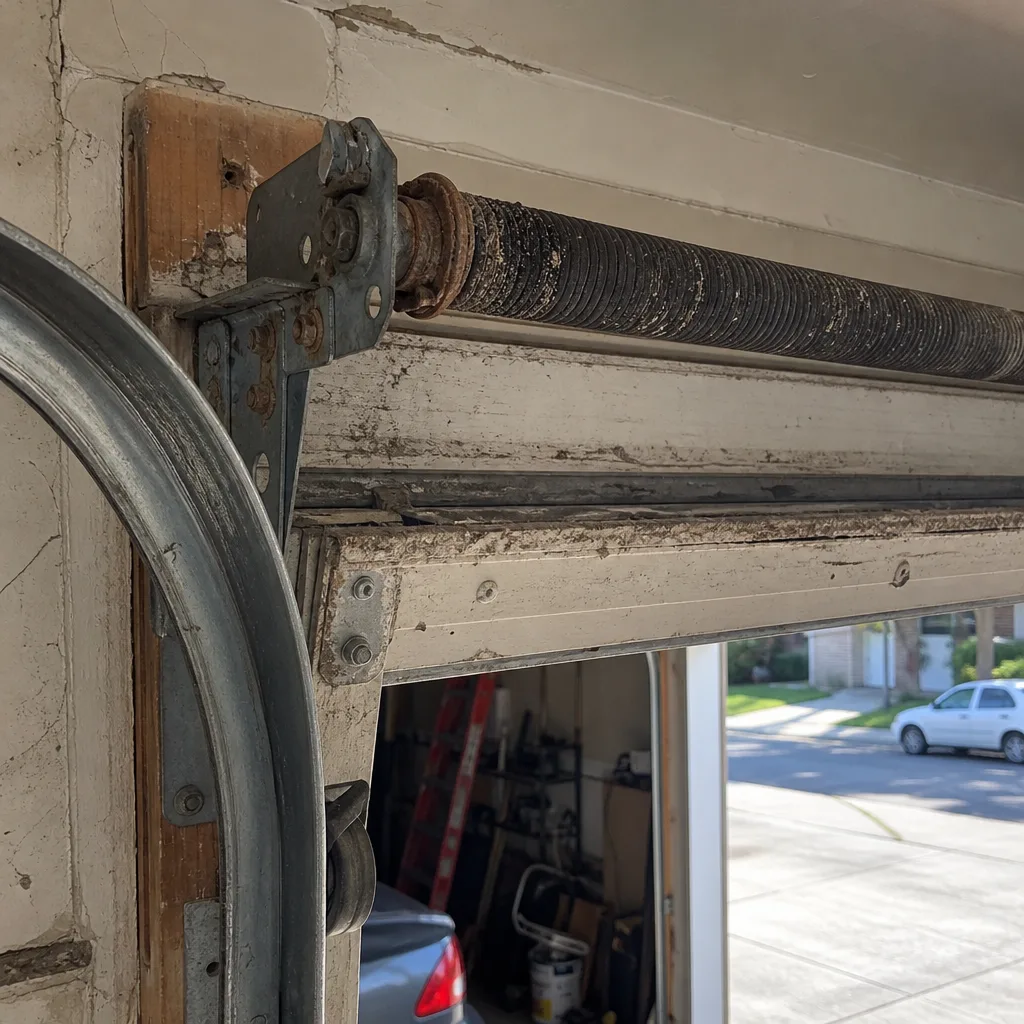 Before
 After
After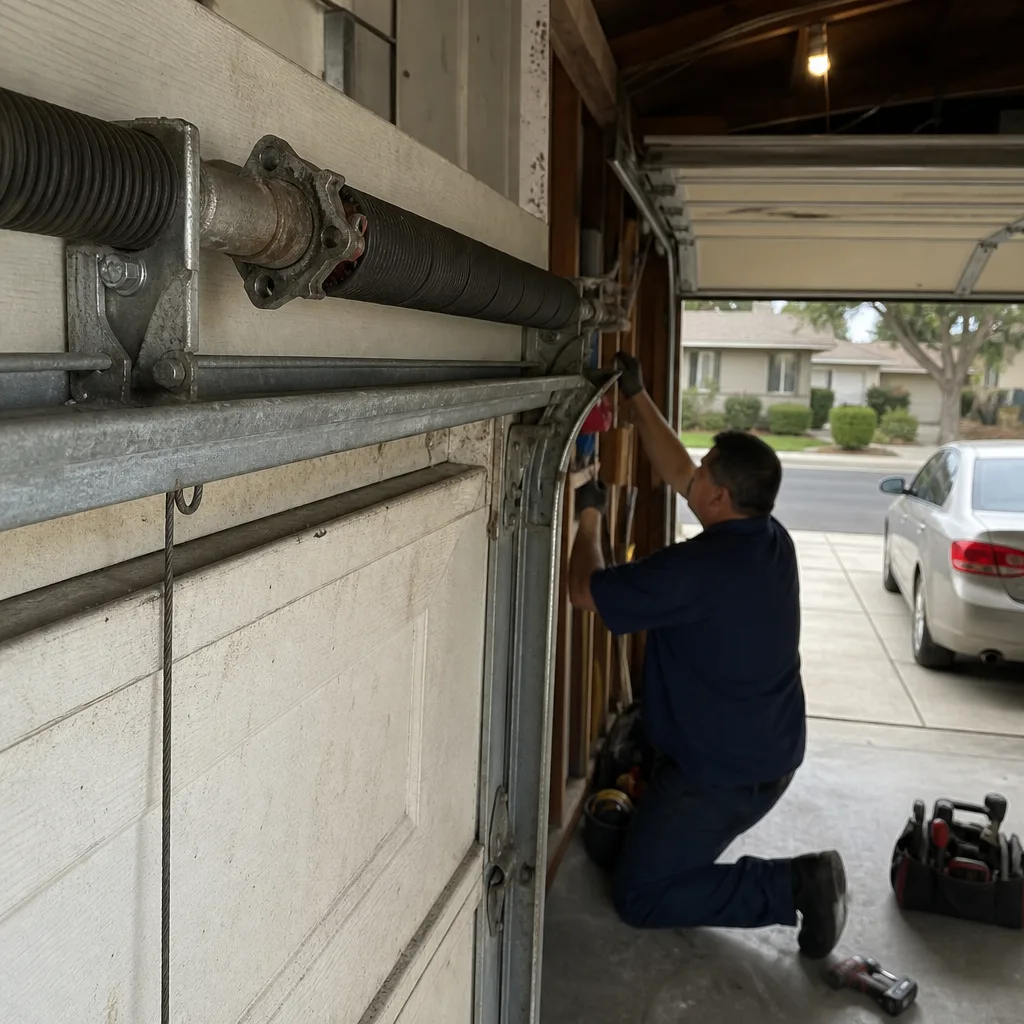 Before
 After
After