
Last updated October 16, 2026
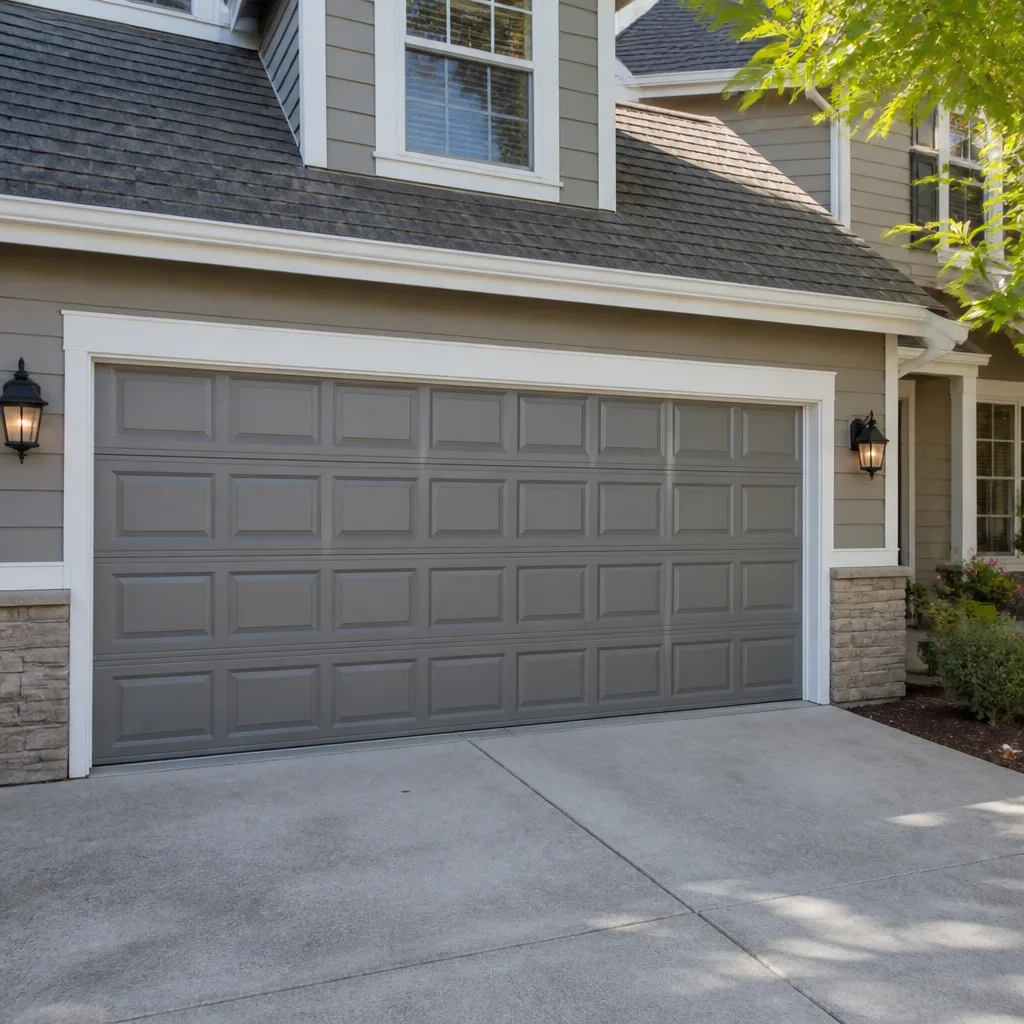 Raised-panel steel
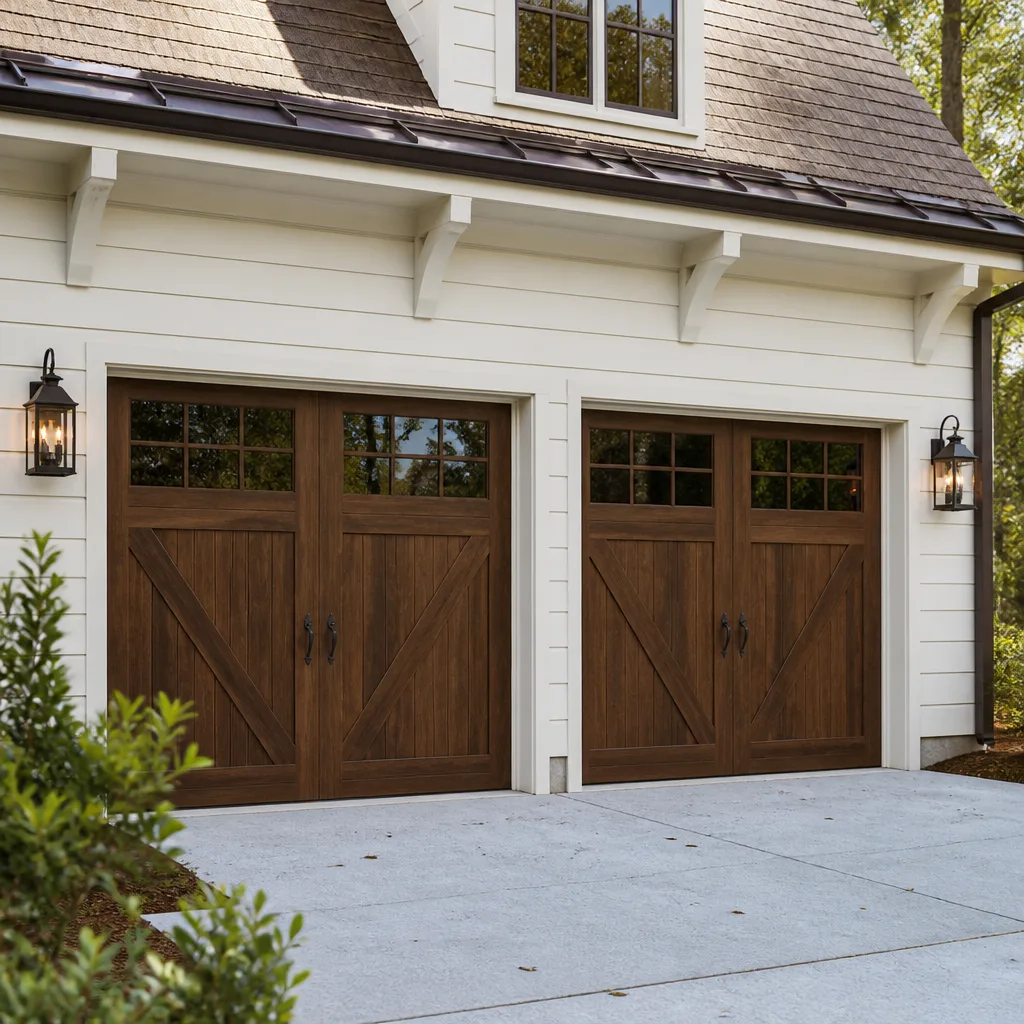 Carriage house
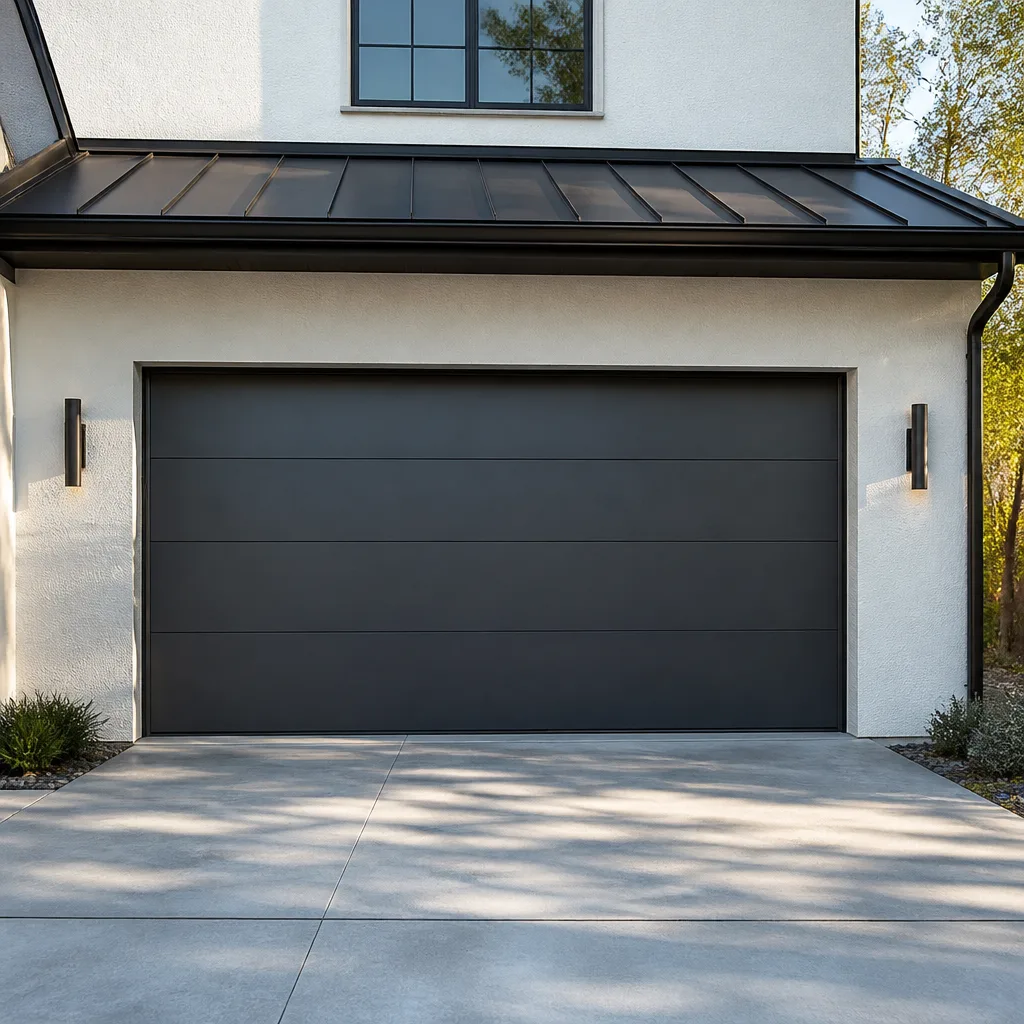 Modern flush
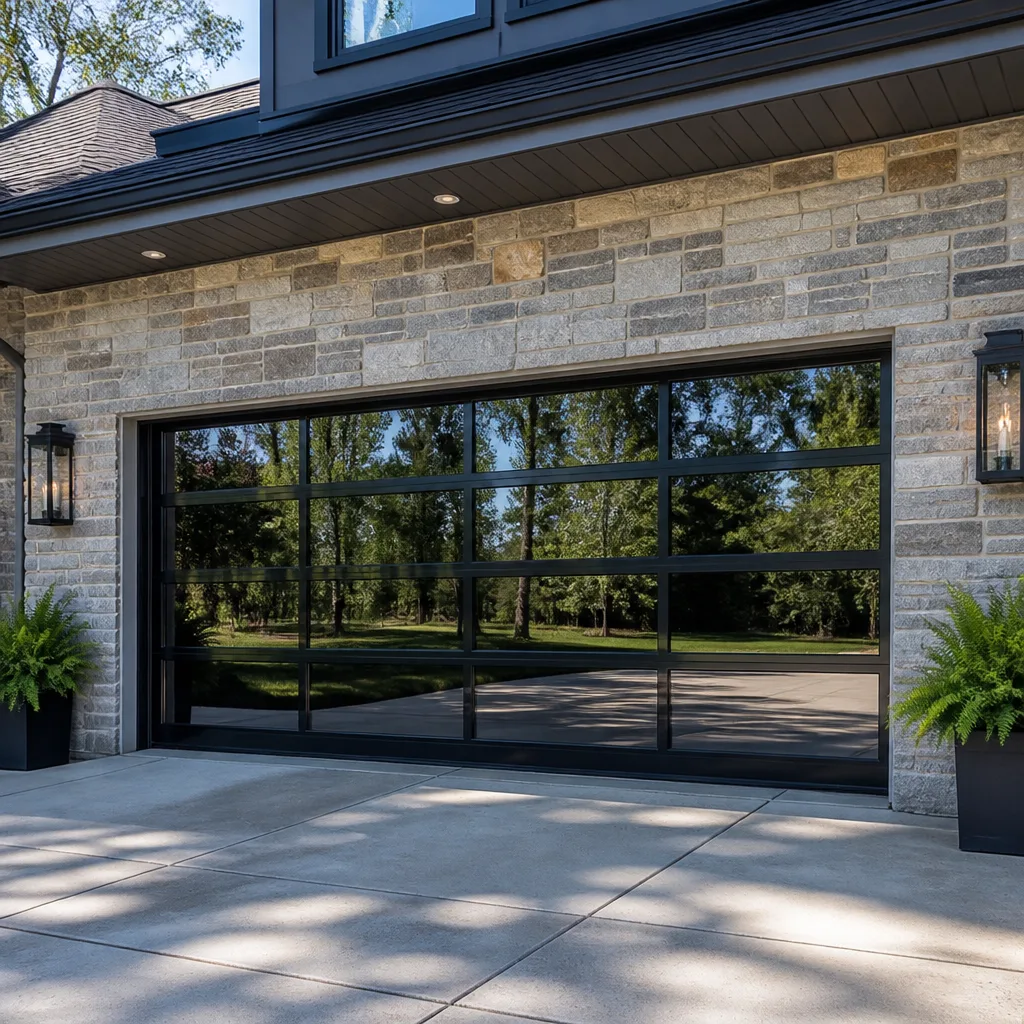 Full-view glass
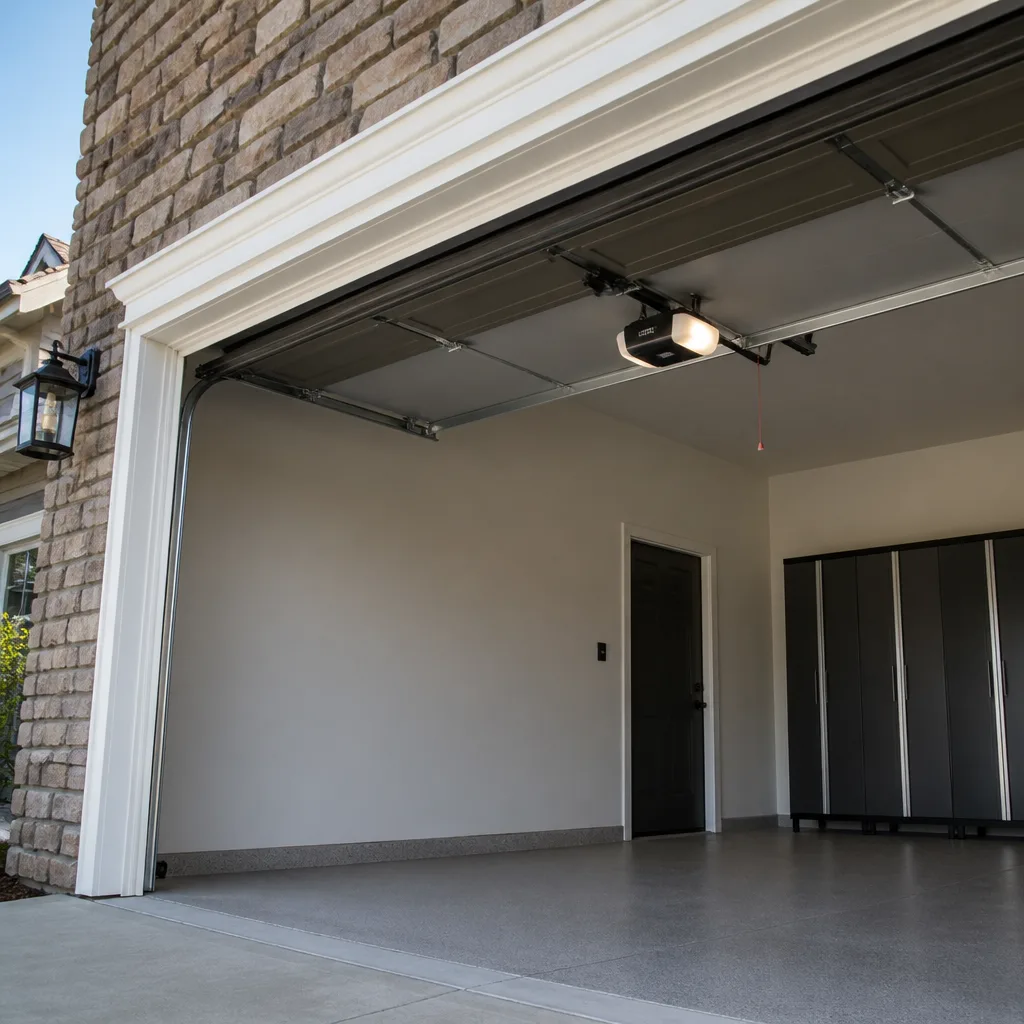 LiftMaster openers
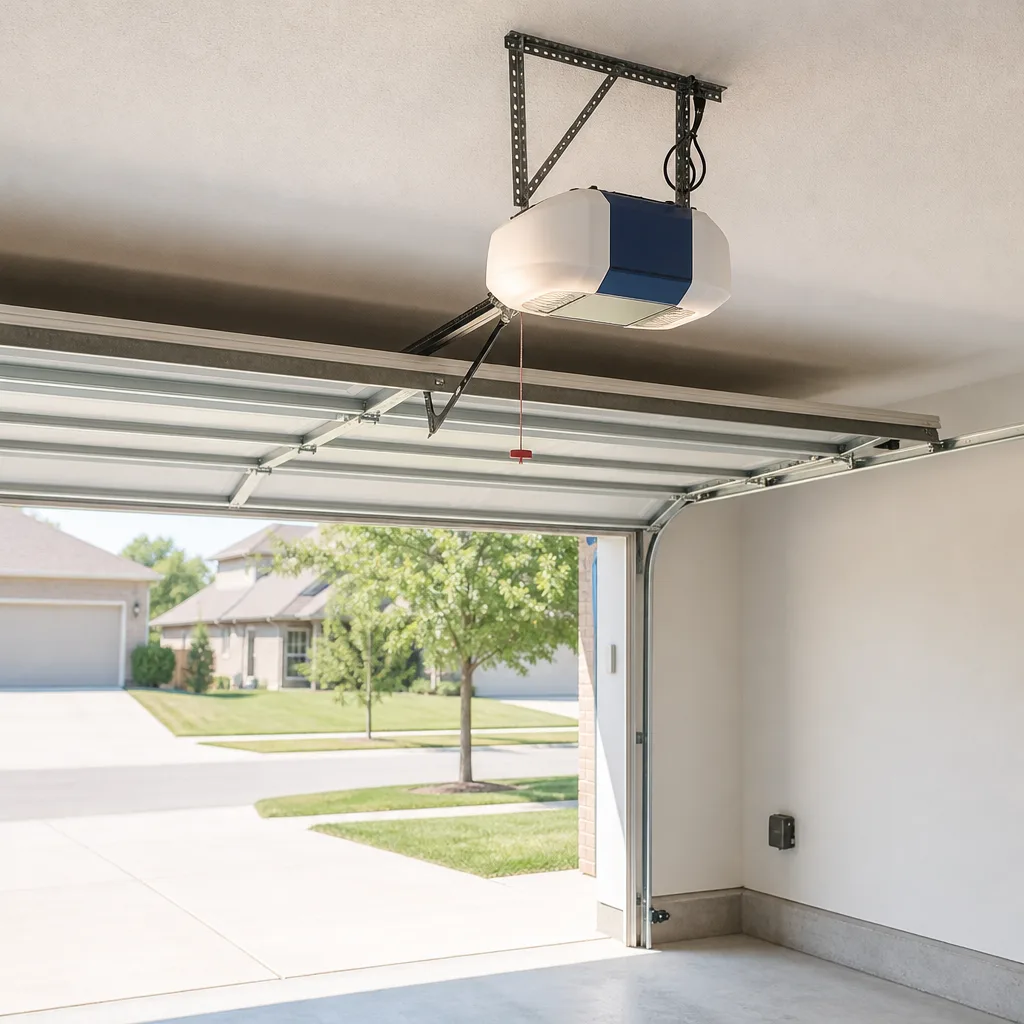 Chamberlain openers
Full 25-point door and opener safety check with every visit - springs, cables, rollers, tracks, and your LiftMaster or Chamberlain opener included
You get a price before we start. It does not change when the truck arrives.
Get your free estimateGarage Door Warning Signs: A West Covina Homeowner’s Reference Guide
Here’s something most West Covina homeowners never hear: the most expensive garage door failures usually don’t announce themselves with grinding or squealing. They develop quietly. A door that lifts slightly unevenly, a bottom edge that doesn’t quite meet the concrete, an opener motor that’s working harder than it should. By the time the obvious symptom shows up, the repair bill has often tripled. This guide walks you through the warning signs we’ve seen turn into four-figure emergencies across West Covina, from the quiet tells to the urgent ones, and how to tell which is which before your door stops working entirely. For a deeper dive, see our Complete Guide to Garage Door in West Covina.
Quick Answer
The warning signs that matter most in West Covina are uneven lifting, a door that doesn’t sit flush when closed, and an opener straining without making noise. Any of these three means a spring or cable is already degrading, even if the door still opens and closes. If your door lifts more than an inch unevenly on one side, you’re typically within 60 days of a cable failure, and the fix costs far less before it breaks than after.
Styles & brands we work with
Table of Contents
- The Silent Warning Signs Most Homeowners Miss
- The 10-Second Balance Test That Reveals Failing Springs
- Spring, Cable, or Track: How to Tell Them Apart by Looking
- Older West Covina Homes and Aging Hardware
- Emergency vs. Schedule It: A Triage Guide
- What Different Noises Actually Mean
- What These Repairs Cost in West Covina
- Common Mistakes to Avoid
- When to Call a Professional
- Frequently Asked Questions
The Silent Warning Signs Most Homeowners Miss
A garage door that sounds fine but opens unevenly by more than an inch is roughly 60 days from a broken cable. There’s no grinding, no slowdown, just a gap you might chalk up to the concrete settling. We’ve replaced dozens of cables in West Covina where the homeowner noticed the unevenness weeks earlier and assumed it was a cosmetic quirk. It isn’t. Uneven lifting means one side of the door is carrying more weight than the other, which means the cables are no longer sharing the load evenly. When that imbalance crosses a threshold, the overloaded cable snaps, and the door can drop hard to one side.
Another silent tell: the door doesn’t sit flush at the bottom when closed. Shine a flashlight along the floor seal at dusk. If you see daylight under one corner, something has shifted. It could be a stretched cable, a settling track, or a spring that’s lost tension on one side. None of these make noise. All of them get worse.
The third quiet warning is an opener that’s straining without making a sound you’d notice. Modern openers from LiftMaster and Chamberlain have built-in force adjustments, so what you hear is a motor running slightly longer or with a faint pitch change. The door takes four extra seconds to clear the opening. It hesitates at the midpoint. It reverses once in a while for no obvious reason. In our experience, that’s the opener compensating for a spring that’s already lost 30 to 40 percent of its lifting capacity. The spring is doing less, the motor is doing more, and the motor wasn’t designed for that workload.
For seasonal garage door care in West Covina, summer heat is the biggest accelerant of wear. Torsion springs are rated for roughly 10,000 cycles, and on hot days the metal expands and contracts while the door sits closed against the heat radiating off the driveway. Garages here regularly hit 110 degrees in August. That thermal cycling shortens spring life compared to coastal communities just 30 miles away. If your door was installed in the early 2010s and has never had a spring replaced, you’re likely past the design life of the original coils.
The 10-Second Balance Test That Reveals Failing Springs
This is the single most useful diagnostic we can teach a West Covina homeowner, and it takes less time than finding your garage remote.
- Pull the red emergency release handle on your opener so the door operates manually. This disconnects the motor from the door.
- Lift the door by hand to about waist height. Use both hands on the bottom rail or handle, and lift smoothly.
- Let go entirely. Do not hold it in place. Remove both hands.
A door with healthy springs will stay roughly where you left it, or drift only an inch or two in either direction. A door that drops toward the floor has failing springs that are no longer counterbalancing the door’s weight. A door that shoots upward on its own is over-sprung, which is less common but means the cables are taking excessive slack and can derail.
If the door won’t lift manually at all, or feels like it weighs 200 pounds, the spring has likely snapped already and you’re fighting the full weight of the door. Call a professional before attempting to force it.
One safety note before we go further: garage door springs, especially torsion springs, hold an enormous amount of stored kinetic energy. When they fail, they release that energy as sharp metal fragments moving fast enough to cause serious injury. The balance test is safe because you’re not touching the spring. Leave spring replacement and cable replacement to a trained tech. This is one of the few household components where the professional recommendation isn’t about convenience, it’s about not getting hurt.
We do this test on nearly every garage door repair in West Covina, and it identifies a failing spring about 70 percent of the time before the customer has any idea anything is wrong.
Spring, Cable, or Track: How to Tell Them Apart by Looking
Most homeowners lump every garage door problem into one category: “the door is broken.” But the fix and the price are completely different depending on which component is failing. Here’s how to tell them apart with a visual inspection.
Spring Issues
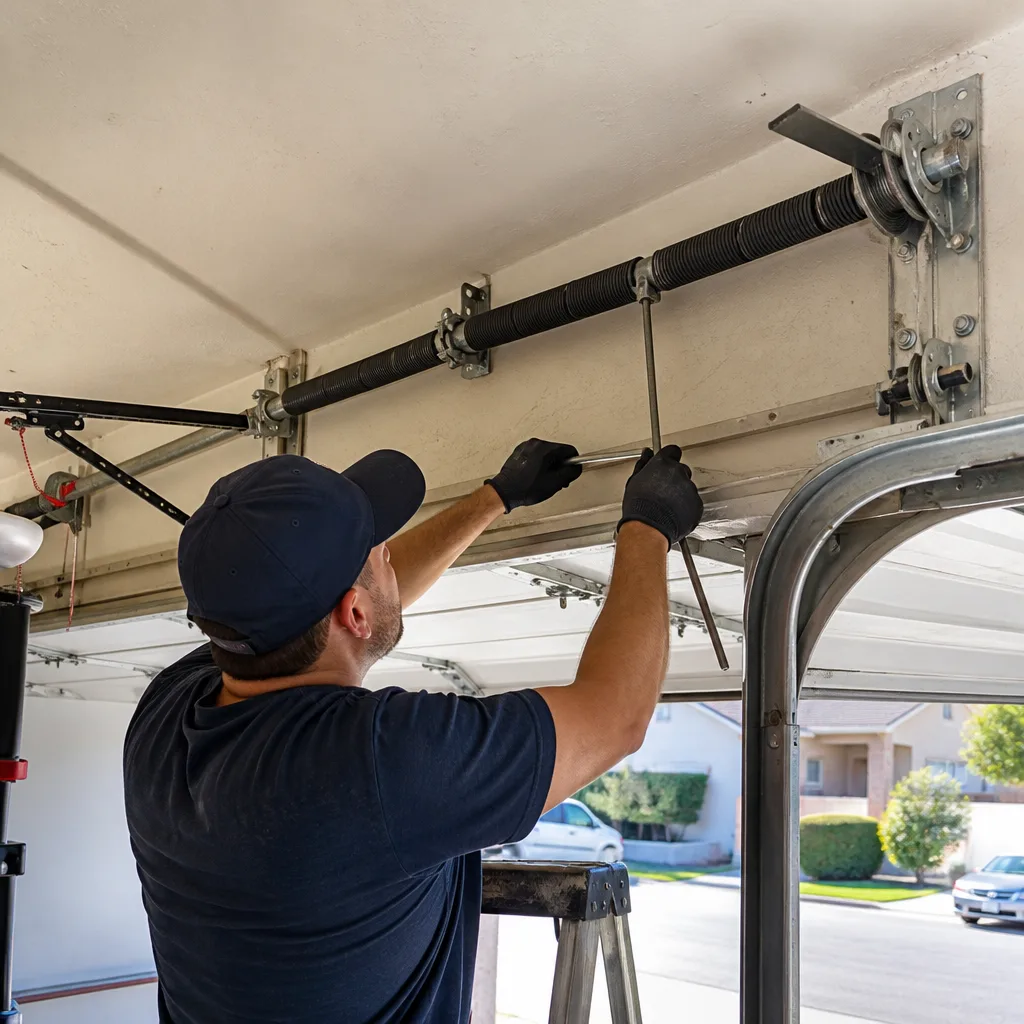
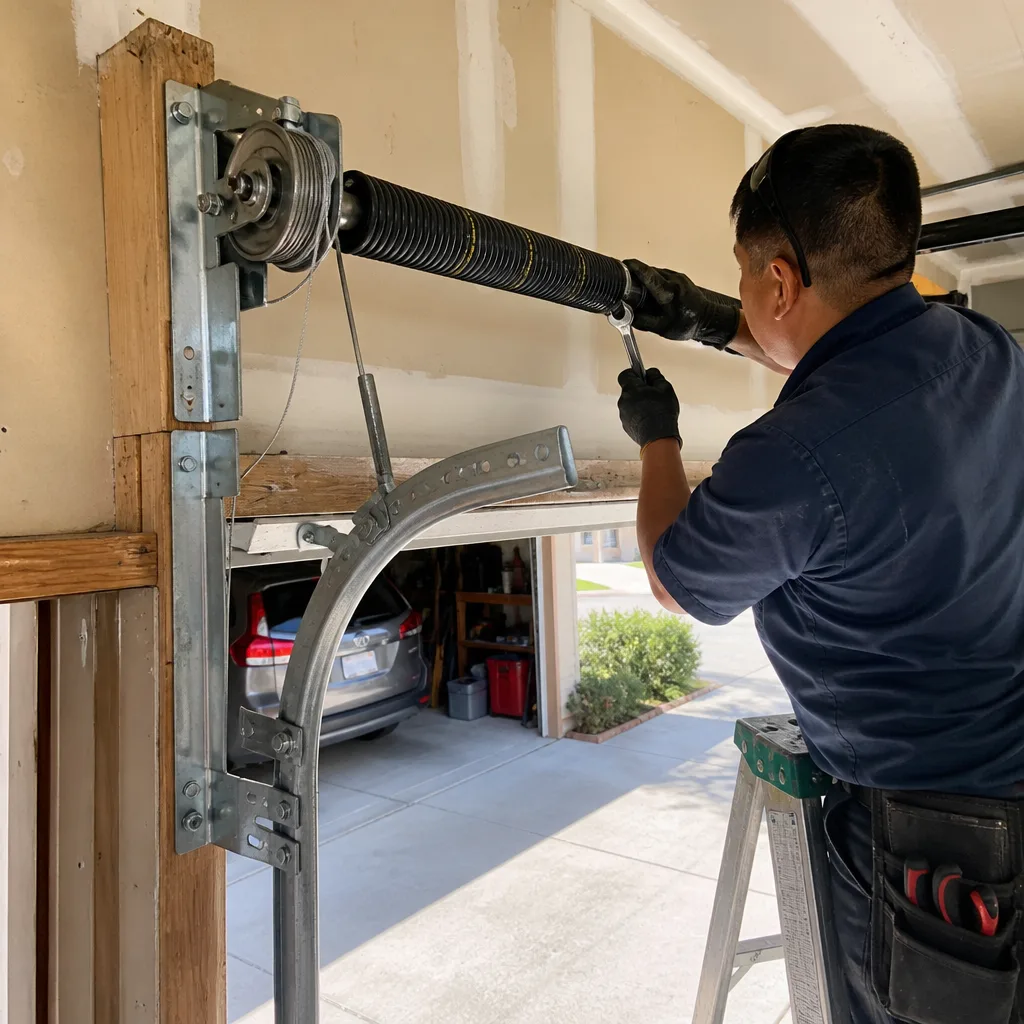
Your spring is the horizontal coil mounted directly above the door opening. On most modern doors, it’s a torsion spring that wraps around a metal shaft. Look for a visible gap in the coil. A healthy torsion spring is one continuous coil from end to end. If you can see a break, even a narrow one, the spring has snapped, and the door is now running entirely on the opener motor, which will burn out if you keep using it. Spring failure also shows up as a door that’s suddenly much heavier to lift manually. Garage door spring repair in West Covina typically runs $150 to $290 for a standard torsion spring replacement, depending on spring size and door weight. The exact number is quoted and agreed before any work starts, which is how it should work everywhere but rarely does.
Cable Issues
Your cables are the steel wires running vertically on both sides of the door, spooled onto drums at the top and anchored to brackets at the bottom. Look for fraying, where individual wire strands have started to separate from the main cable, and look for slack. A cable that’s carrying proper tension runs tight and straight. A cable that’s loose, kinked, or has visible rust at the anchor point is already failing. Because cables work in pairs, when one fails, the other jerks against the sudden load and often fails too. Garage door cable repair in West Covina is a same-day job in most cases, and it’s far cheaper before the cable snaps than after.
Track Issues
Your tracks are the metal channels that guide the rollers up and down both sides of the door. Look at the gap between the roller and the track. If the gap is wider at the bottom than the top, the track has been knocked out of alignment. Look for shiny wear marks or gouges on the inside face of the track, which indicate the rollers are binding instead of rolling. Track problems often announce themselves with a scraping sound near the bottom of the travel. The good news: track adjustments are usually one of the less expensive fixes, provided the track isn’t bent so badly it needs replacement.
Older West Covina Homes and Aging Hardware
West Covina’s housing stock skews older than a lot of Southern California. Drive through neighborhoods off Azusa Avenue or around Cameron Avenue and you’ll see homes from the 1950s through the 1970s. We work on a lot of these, and many still have original or near-original garage door hardware.
Here’s what that means in practical terms. A garage door installed in the 1970s or 1980s was built around extension springs, not torsion springs. Extension springs run parallel to the tracks, above both sides of the door, and they stretch rather than twist. They have a shorter service life than torsion springs, and when they fail, they can send broken pieces flying across the garage unless a safety cable runs through the spring’s core. Many older West Covina garage doors lack those safety cables.
The rollers are another weak point. Older doors often have steel rollers without bearings. Over decades, they wear flat spots into the wheels and grind them into the tracks. You’ll hear a rumble or feel a vibration in the floor when the door moves. Replacing these with nylon-bearing rollers smooths out the operation and reduces strain on the opener.
If your home still has its original 1970s-to-1990s hardware, have it inspected even if it seems to work fine. The hinges, brackets, and fasteners on these doors were never engineered to last 40 or 50 years, and when a hinge tears out of a wood door panel, the panel itself often has to be replaced. That’s a $400-plus repair that starts as a $40 hinge replacement if caught early. Genie and Raynor both built openers that are still running in some West Covina garages, but the door hardware they’re attached to is usually original, and that’s the part that fails.
Emergency vs. Schedule It: A Triage Guide
Not every warning sign requires a same-day call. Here’s how we classify what we see in West Covina, and what to do about each category.
Same-Day Emergency
- Broken spring. If you can see a gap in the coil, or the door won’t lift and the opener just spins or clicks, stop using the door. The opener is now lifting the full weight of the door, and it will burn out. Call for same-day spring replacement.
- Frayed or snapped cable. A snapped cable means the door’s balance is gone. If you keep operating it, the remaining cable takes the whole load and the door can come off its tracks.
- Door off track. If the door is hanging at an angle inside the opening, or the rollers have left the track, do not attempt to lower it. This can drop hard and damage the door, the track, or a car parked underneath.
- Door won’t close fully and you can’t secure the garage. A garage connected to your house with the door stuck open is a security problem, not just an inconvenience. This deserves immediate attention.
Schedule Within Two Weeks
- Uneven lifting of less than an inch, with no visible cable damage yet.
- Door doesn’t sit flush by a quarter to half an inch at one corner.
- Opener running noticeably harder, with a slight delay or hesitation mid-travel.
- One roller showing visible wear or wobble.
Watch It for a Month
- Mild squeaking from hinges that quiets after lubrication.
- Weatherstripping that’s cracked but still sealing.
- A door that’s slightly loud but moves smoothly and balances correctly.
- Minor cosmetic rust on the bottom panel, with no structural rot.
The dividing line is simple. Anything that affects balance, security, or the structural integrity of the door is urgent. Anything that’s only a sound or a cosmetic issue can wait, but not indefinitely.
What Different Noises Actually Mean
Noise is the warning sign most people notice first, but it’s also the one they’re most likely to misread. Here’s a breakdown of what you’re actually hearing.
Squeaking or squealing usually means dry rollers or hinges. The fix is often simple lubrication, but if the squeak persists after lubricating, the roller bearings are shot and the roller needs replacement. A squeal that only happens at one specific point in the travel usually points to a single bad roller rather than a door-wide issue.
Rumbling or grinding typically indicates worn rollers, especially steel-on-steel rollers on older West Covina doors. The sound is the metal wheel grinding against the metal track. Left alone, this wears grooves into the track and eventually derails the door.
A popping or banging sound coming from the spring itself means the spring is binding as it winds and unwinds. This happens when the coils have started to rub against themselves, often because the spring has lost its original shape or the bearings at the ends have worn. This is early-stage spring failure, and it usually precedes a snap by weeks, sometimes days.
Rattling from the opener rail is usually a loose chain or belt. Tightening takes minutes, but if the chain is stretched beyond adjustment, the opener will need work. Chamberlain and LiftMaster openers have specific tension specs, and over-tightening a chain can damage the gear.
None of these sounds are normal. A properly maintained garage door is almost silent, with the opener motor itself being the loudest component. If your door makes any of these sounds consistently, something is wearing out.
What These Repairs Cost in West Covina
Here’s what we quote for the most common warning-sign-related repairs in West Covina. These are the ranges you should expect, and every one of them is delivered as a written price before any work starts.
- Torsion spring replacement: $150 to $290, depending on spring size and door weight. The spring itself is matched to your specific door, and the technician should replace both springs at once even if only one has broken, since they wear at the same rate.
- Cable replacement: $120 to $220, including re-spooling the cable onto the drum and verifying the door balance afterward.
- Roller replacement: $10 to $25 per roller, with most doors taking 12 rollers. Nylon-bearing rollers cost slightly more than steel but last longer and run quieter.
- Track realignment: $85 to $150, provided the track isn’t bent. A bent track that needs replacement runs higher, and the exact number depends on whether it’s a standard or custom track profile.
- Hinge replacement: $20 to $45 per hinge, with labor often bundled if multiple hinges are replaced at once.
These prices reflect what we actually quote in West Covina. If you’re seeing numbers far below this range, the math usually doesn’t include the full job, or the parts are lower grade than what a door of your weight and cycle count requires. If you’re seeing numbers far above this range, you’re being charged a premium you don’t need to pay. For a full breakdown, the Marlow Garage Door Repair West Covina home page walks through how we price every job, or you can call us and get the number over the phone in about five minutes.
Common Mistakes to Avoid
- Ignoring uneven lifting because the door still works. This is the number one mistake we see, and it directly precedes most of the snapped cables we replace. The imbalance compounds, and the failure is sudden and expensive.
- Lubricating a spring to stop the popping sound. Lubrication does not fix internal spring binding. At best it masks the symptom for a few days. At worst it gives you false confidence while the spring continues to degrade.
- Replacing only one spring when a pair fails. The second spring is the same age and has the same cycle count. It will fail soon, and now the new spring has to compensate for a worn partner. This creates imbalance, which stresses the cables.
- Attempting to retension or replace a torsion spring yourself. The stored energy in a wound torsion spring is enough to break bones or send a winding bar through sheetrock. This is the one repair where the DIY risk genuinely isn’t worth the money saved.
- Assuming the opener is the problem when the door moves slowly. Slow movement usually means a failing spring, not a failing motor. Replacing the opener without addressing the spring just burns out the new opener within a year or two.
- Waiting until the door won’t open at all to call. We understand why this happens. But a door that’s been showing warning signs for six months and finally fails on a Monday morning costs more, takes longer, and strands you at home. Catching it early is cheaper by a factor of three in most cases.
When to Call a Professional
Call a professional if your door lifts unevenly by more than an inch, if you can see a gap in the spring coil, if a cable shows fraying or slack, if the door has come off its track, or if the balance test fails. These are all signs of a structural issue that gets more expensive by the week.
Call a professional if your hinges are pulling out of a wood door panel, if your rollers have worn flat spots, or if you have any doubts at all about what you’re seeing. The inspection takes 20 minutes and costs nothing. Marlow Garage Door Repair West Covina offers free estimates throughout West Covina. Jaylen Ross and the team will give you a written price before any work starts, and you can book online in minutes. Call (831) 216-7932 for a free estimate.
Frequently Asked Questions
Most noise-related repairs in West Covina run between $20 and $290 depending on the cause. A squeaking roller that needs replacement costs $10 to $25 per roller, while a popping spring that needs full replacement runs $150 to $290. The only way to know which one you’re dealing with is a quick inspection, which is free. Call (831) 216-7932 and we’ll tell you over the phone what to look for.
Yes, it can. A broken spring removes the counterbalance that holds the door’s weight, which means the door can drop hard and fast, especially if a cable also fails in the process. This is exactly why we recommend stopping use of the door immediately if you suspect a broken spring, and why spring replacement is a professional job rather than a DIY one.
Run the 10-second balance test described above. If the door drops when you release it at waist height, the springs are failing. You can also look for a visible gap in the torsion spring coil above the door. If you see one, the spring is already broken and should be replaced before you operate the door again.
Yes. We run same-day service for spring, cable, and track emergencies across West Covina. Jaylen Ross and the team carry the common spring sizes and cable types on the truck, so most repairs are completed on the first visit. Call (831) 216-7932 and a live person answers, day or night.
No. The written price we deliver before starting is the number on the invoice, full stop. If we find something unexpected during the repair, we stop, explain what we found, and give you a new written price before proceeding. You approve the number, or we don’t do the work. That’s the rule on every job.
The big one is heat cycling on torsion springs. West Covina garages routinely exceed 105 degrees in summer, and that daily expansion and contraction shortens spring life compared to cooler coastal areas. Older homes in neighborhoods off Azusa Avenue also tend to have original extension-spring hardware from the 1970s and 1980s that’s well past its design life. If your home falls into either category, an annual inspection is worth the 20 minutes.
The Bottom Line
The pattern is consistent across every West Covina neighborhood we serve: the homeowner who catches the silent warning signs early pays $150 to $250. The one who waits for the loud failure pays $400 to $800, and often loses a day of work in the process. Uneven lifting, a door that doesn’t sit flush, and an opener that’s working harder than it should are the three tells that matter most. Watch for them, run the balance test once a season, and call before the cable snaps. Find more guides & resources on our blog. Jaylen Ross and the team at Marlow Garage Door Repair West Covina have been doing this since 2002, and every job comes with a written price and the 365-Day Done Right Promise. Call (831) 216-7932 for a free estimate, or book online and see your tech en route with The Relay Visibility Guarantee.
Written by Jaylen Ross, Owner at Marlow Garage Door Repair West Covina, serving West Covina since 2002.
See the difference
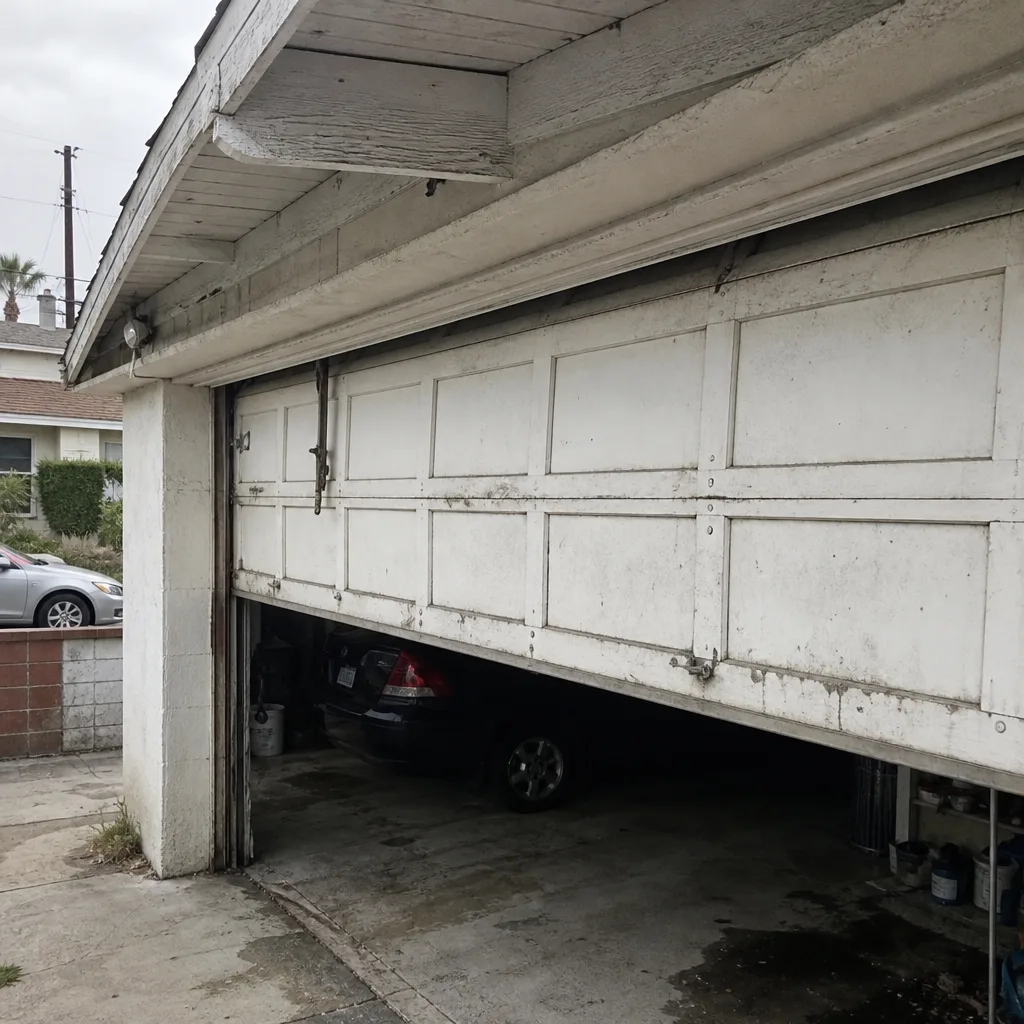 Before
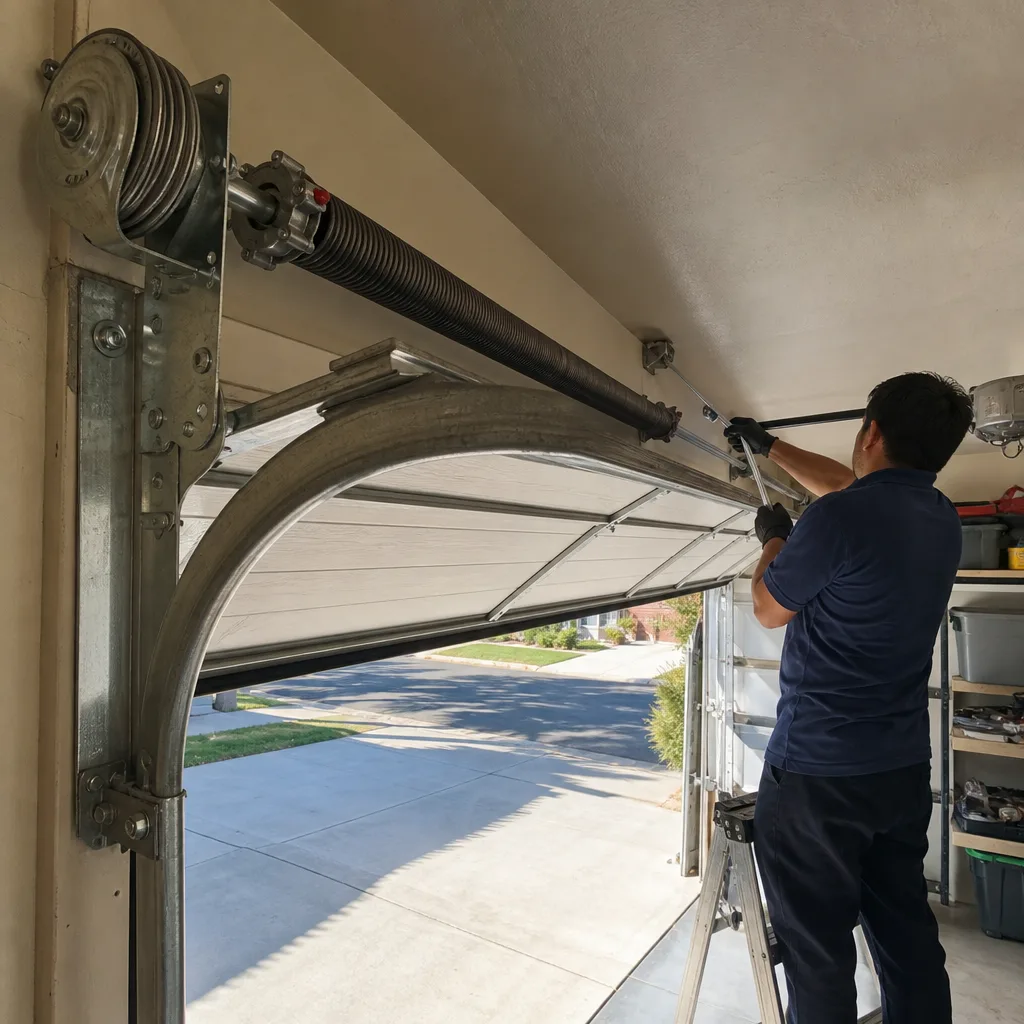 After
After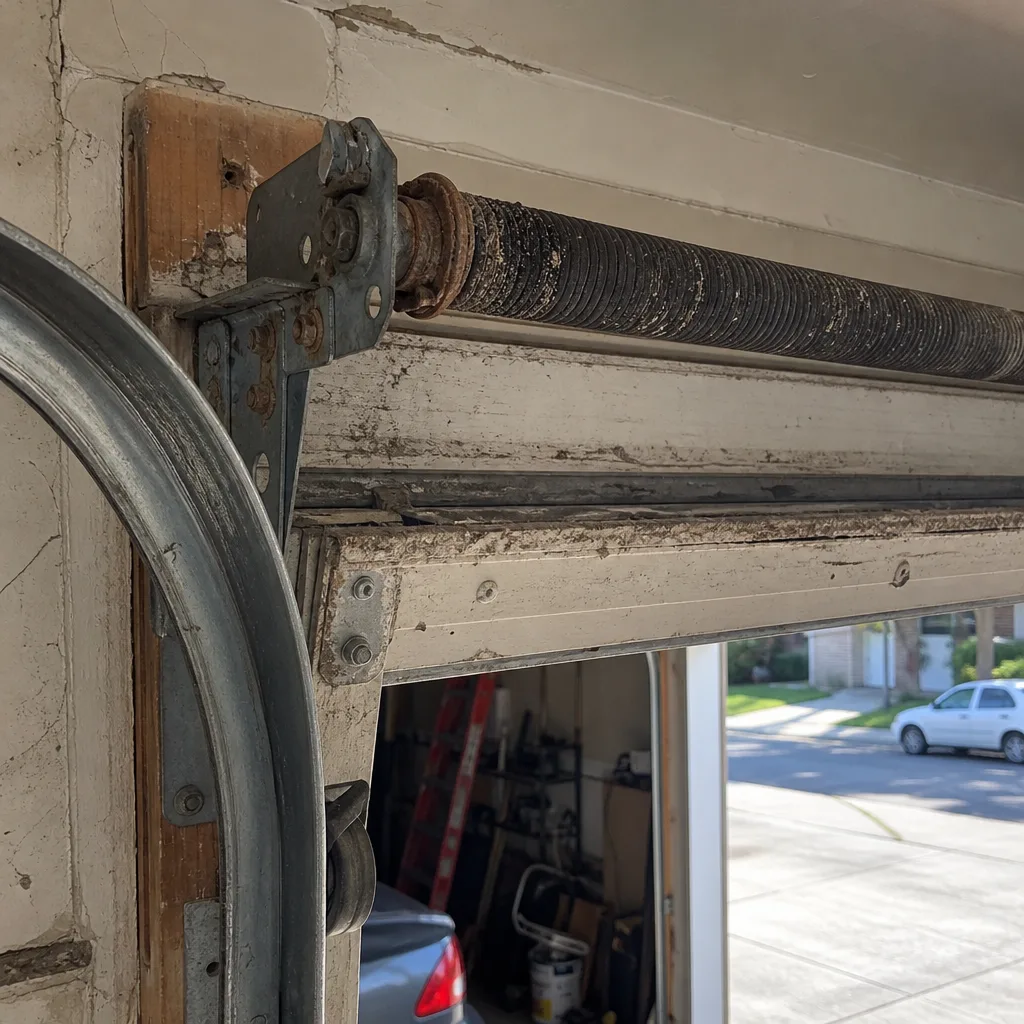 Before
 After
After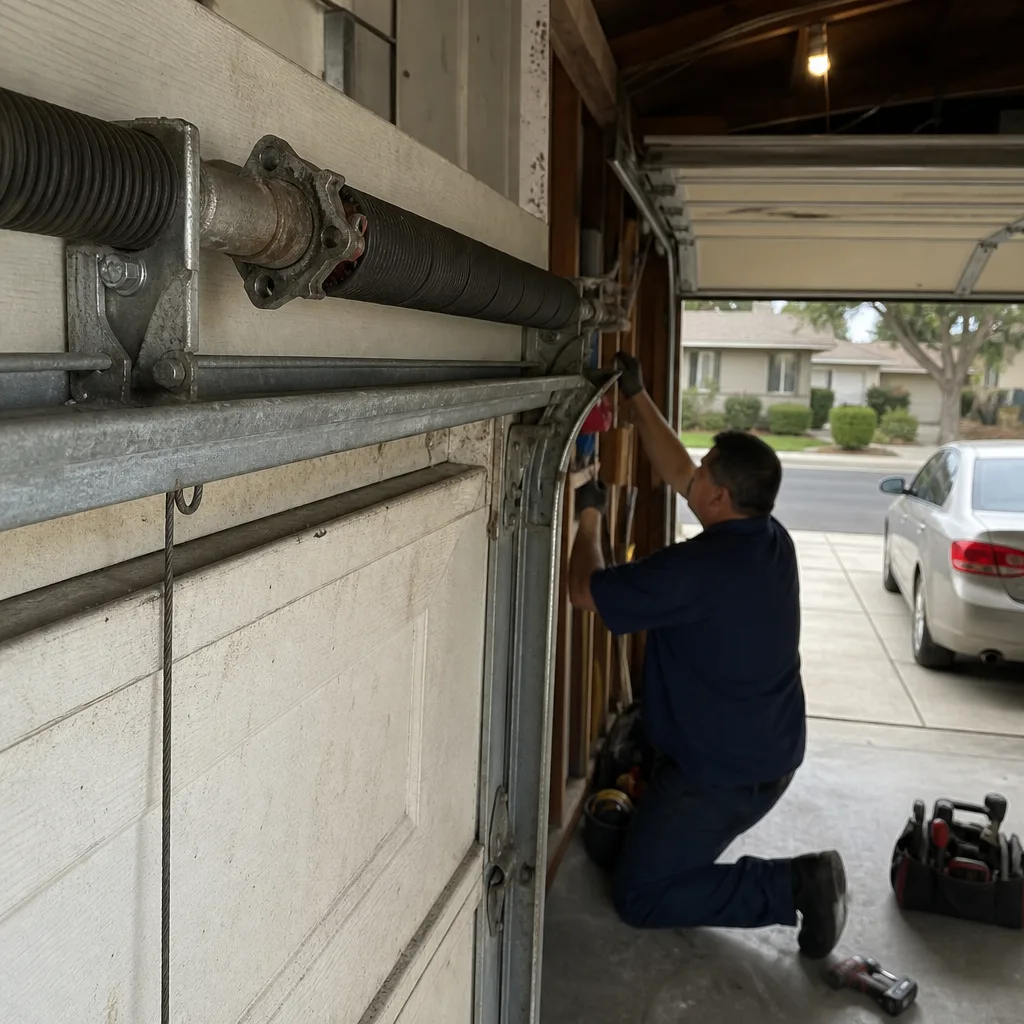 Before
 After
After